Italians have been chasing umami for centuries — they just never called it that. Long before a Japanese chemist named it in 1908, Italian cooks were dissolving anchovies into olive oil, grating aged Parmigiano-Reggiano over everything, and slow-cooking tomatoes into concentrated, savory pastes. They were engineering depth without a word for what they were doing. Which is why soy sauce in Italian food isn’t the cultural mashup it sounds like — it’s a meeting between two traditions that were already speaking the same flavor language.
That said, not all soy sauces belong in an Italian kitchen. Choosing the wrong one can flatten a dish rather than lift it, or introduce a fermented edge that competes rather than complements. The right choice depends on what Italian cooking actually needs, and why.
Why Italian Cooking and Soy Sauce Have More in Common Than You’d Think
The Umami Information Center has documented that Parmigiano-Reggiano aged 48 months contains up to 2,220 mg of free glutamate per 100 grams — making it one of the single richest natural sources of umami on the planet. Anchovies, tomatoes, and porcini mushrooms follow close behind, which explains why Italian cooking tastes so deeply satisfying without relying on a single dominant spice.
Soy sauce gets its umami character from the same compound: glutamic acid, produced during fermentation as koji mold (Aspergillus oryzae) breaks down soybean proteins. As Ole Mouritsen and Klavs Styrbæk write in Umami: Unlocking the Secrets of the Fifth Taste (Columbia University Press), umami in fermented products like soy sauce works through a synergistic effect — glutamate and nucleotides combining to produce a taste sensation greater than either compound alone, the same principle behind pairing Parmigiano with anchovies in a classic pasta sauce. That’s precisely what a well-placed tablespoon of soy sauce does in a long-simmered Italian ragù or a tomato-based sauce that tastes almost right but not quite there.
The applications are specific and measured — this isn’t about adding soy sauce to pasta carbonara. It’s about understanding where it’s fermented, and amino-acid richness reinforces what Italian cooking is already doing.
Which Soy Sauce to Reach For
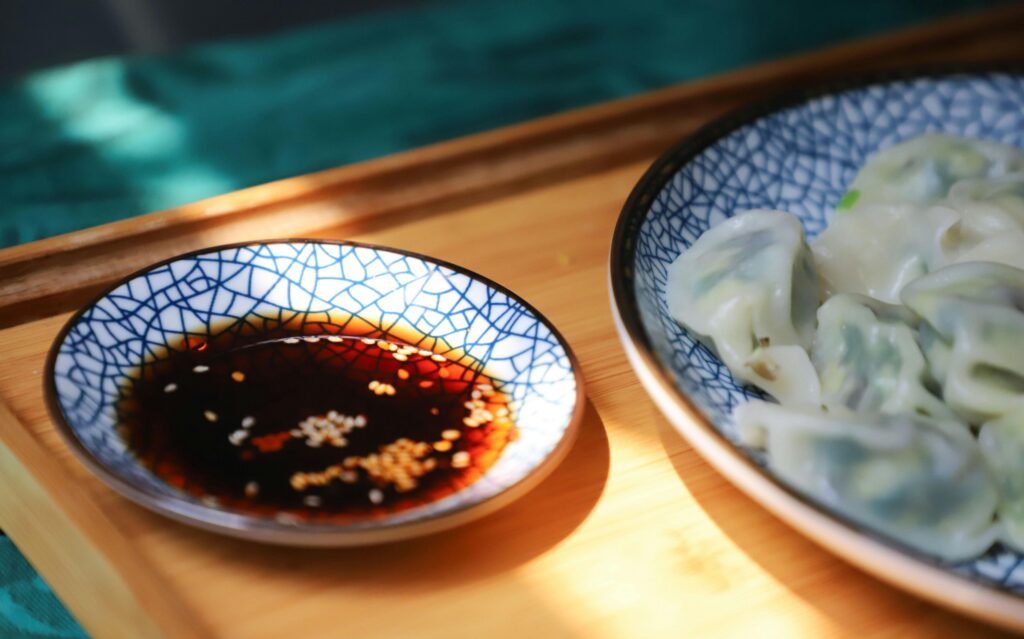
Koikuchi shoyu (Japanese dark soy sauce) is the most practical choice for most Italian applications. It’s balanced — equal parts soybeans and wheat, fermented for six months to a year — with rounded umami, a hint of sweetness, and enough acidity to integrate cleanly into sauces without announcing itself. A teaspoon stirred into a tomato-based pasta sauce in the last few minutes of cooking deepens the flavor without shifting it in any perceptible Asian direction. It works similarly in slow-braised meats, where it adds savory weight alongside the wine and aromatics.
Tamari is worth considering for dishes where you want more concentrated soy character with less aromatic brightness. Made with little to no wheat, tamari is thicker and more direct — useful for deglazing a pan of mushrooms destined for a risotto, where that intensity holds up against the starch and fat of the dish. Because tamari’s flavor is more soybean-forward, it pairs particularly well with porcini or dried mushrooms, which already carry significant glutamate of their own.
Light soy sauce — Chinese sheng chou or Japanese usukuchi — works in applications where salt and umami are needed without adding color. Bagna cauda, the Piedmontese warm anchovy dip, is one example where a dash of light soy sauce can reinforce the anchovy’s savory base while preserving the pale, oil-rich appearance of the dish.
What to avoid: dark Chinese soy sauce, which contains molasses and caramel and introduces a sweetness and color that can throw off the balance of tomato-forward Italian dishes. And anything chemically produced — hydrolyzed versions taste one-dimensional and sharp, and that harshness becomes obvious in long-cooked preparations where a naturally brewed sauce’s complexity would have had time to develop.
A Practical Note on Application
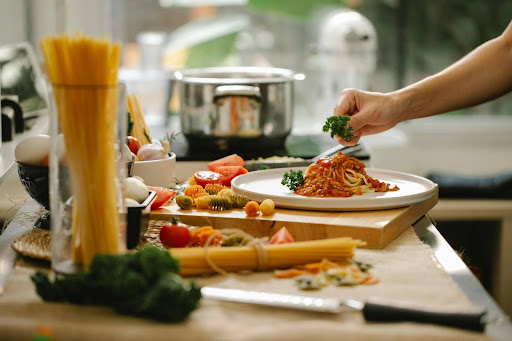
The key is restraint. In Italian cooking, soy sauce functions as a background enhancer, not a lead flavor. The goal is the same as adding a Parmigiano rind to a soup — you’re not trying to taste the ingredient directly, you’re using it to lift everything else. One teaspoon in a sauce serving four is usually enough. Used in excess, any soy sauce will push a dish in a direction that no longer reads as Italian.
This same logic connects to why soy sauce has long had a quiet role in professional Italian kitchens. Many chefs who’d never list it on a menu have reached for it during development to resolve a sauce that’s technically correct but somehow flat — and found that a small addition closes the gap without leaving a trace.
The Dish That Proves The point
The simplest proof of this article’s argument: Pasta al burro. Butter, pasta water, Parmesan, with one teaspoon of koikuchi stirred in off the heat. The result is noticeably deeper and more satisfying, and no one at the table will know why.
Serves 2
INGREDIENTS
- 200 g spaghetti or tagliolini
- 3 tablespoons unsalted butter, cold, cut into cubes
- 1 teaspoon naturally brewed koikuchi shoyu
- 50 g Parmigiano-Reggiano, finely grated, plus more to finish
- Reserved pasta water, as needed
- Freshly ground black pepper
PREPARATION
Cook pasta in well-salted water until just shy of al dente, reserving one cup of cooking water before draining. In a wide pan over low heat, melt the butter with a splash of pasta water, stirring to emulsify. Add the drained pasta and toss, adding more pasta water as needed until the sauce is glossy and coats the noodles. Remove from heat, add the Parmigiano and toss until melted, then stir in the koikuchi. Finish with black pepper and extra Parmigiano. Serve immediately.