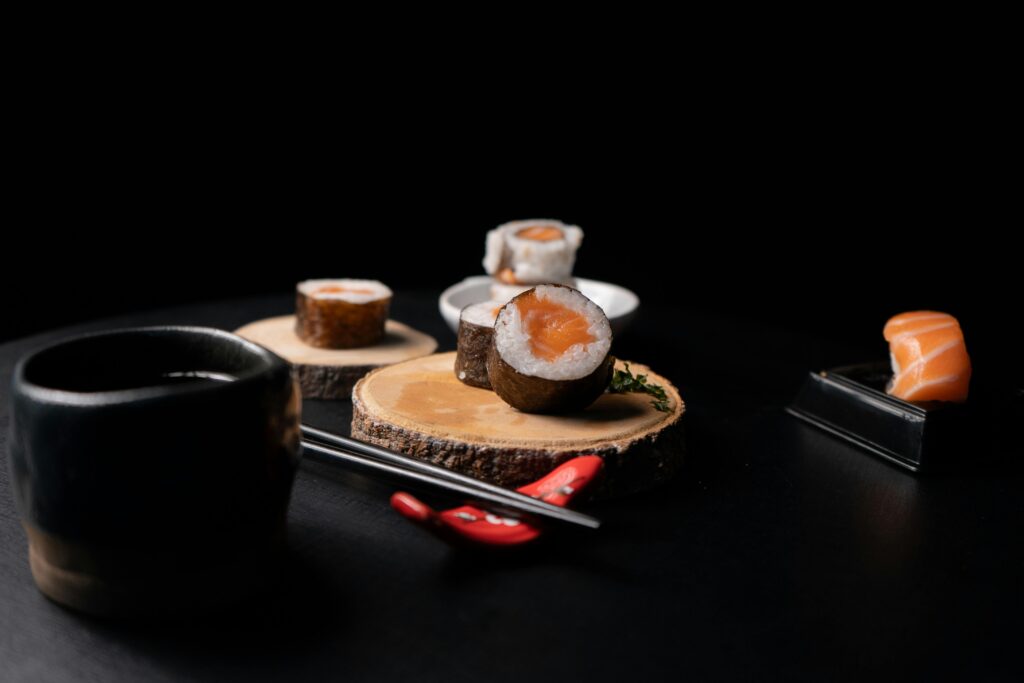
You sit down at the counter, the chef hands you a piece of perfectly formed nigiri — and your first instinct is to reach for the small dish of soy sauce and dunk it. Understandable. Almost certainly not what the chef intended.
At Edomae sushi counters, soy sauce isn’t served on the side at all. It’s brushed directly onto the nigiri before the piece reaches your hand, applied by the chef as a deliberate final step. If you’re still dunking, you’re one step behind.
Not One Sauce, but Several
The answer to what soy sauce sushi restaurants actually use depends on the restaurant, the region, and the piece being served.
Koikuchi shoyu is the baseline. According to the Japan Soy Sauce Information Center, koikuchi accounts for around 80% of all soy sauce produced in Japan — and it’s the workhorse at most sushi counters worldwide, showing up in those small ceramic dishes placed in front of every seat. Balanced, slightly sweet, and versatile, it handles dipping without overwhelming the fish. But koikuchi is the floor, not the ceiling.
Nikiri: What Gets Brushed On
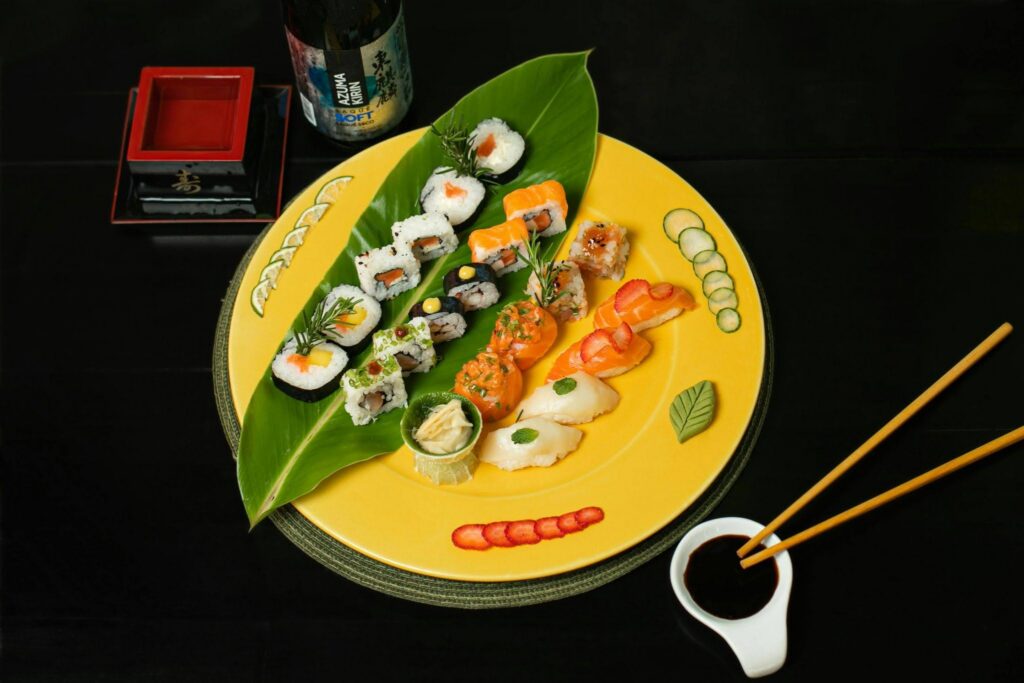
At Edomae sushi counters — the style that originated in Edo-period Tokyo — the soy sauce gets its own preparation before it touches a piece of fish. It’s called nikiri, and it’s what distinguishes this approach from simply setting out a bottle
Nikiri is made by gently simmering koikuchi shoyu with mirin, sake, and sometimes dashi until the alcohol cooks off and the sauce concentrates into something rounder and less sharp. The word itself — nikiri, or “simmered to completion” — describes the process exactly: the raw edges smooth out, the mirin rounds the saltiness, and the result coats fish in a way raw shoyu never would. The chef brushes it on just before serving — you don’t add more, and you don’t need to. As Trevor Corson writes in The Story of Sushi, “Nikiri is a kinder, gentler, and more complex soy sauce, with a broad array of flavor compounds appropriate for enhancing sushi.” That complexity comes in part from dashi — whose glutamate and IMP (inosinic acid) interact synergistically, producing the layered umami that gives nikiri its depth.
Tamari for Sashimi
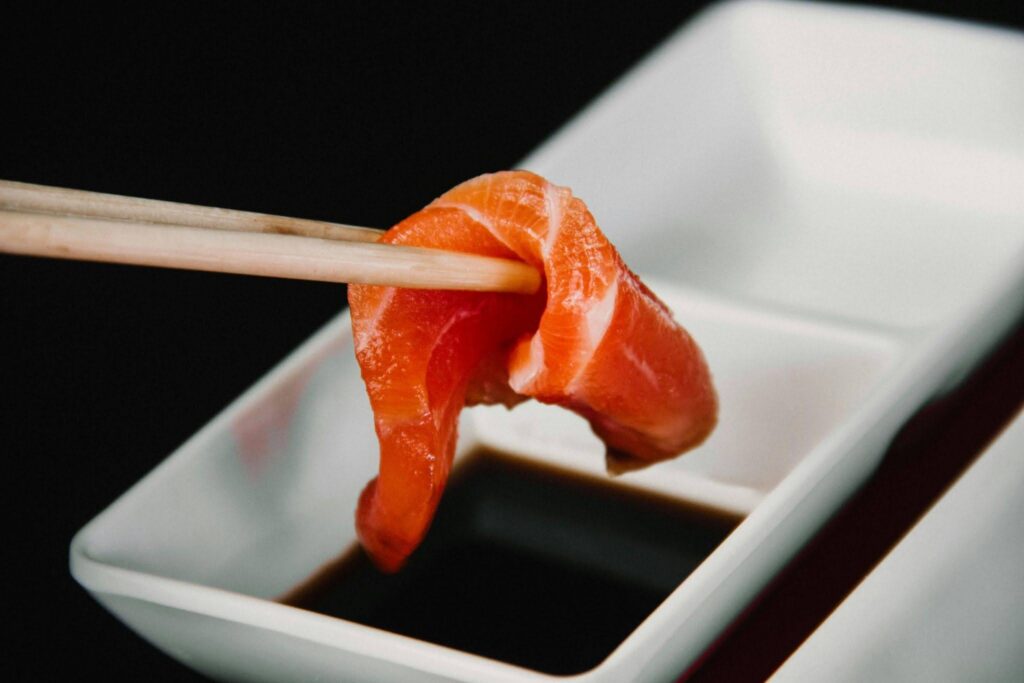
Sashimi is a different matter. Served clean and unseasoned, it benefits from something more assertive — and that’s where tamari earns its place.
Tamari is made predominantly from soybeans with little to no wheat, giving it a thicker body, darker color, and more concentrated umami than standard koikuchi. The Japan Soy Sauce Information Center notes that tamari has long been called sashimi tamari — a name that reflects how naturally its richness suits raw fish. Produced mainly in Japan’s Chubu region, it has deep roots at sashimi counters across central and western Japan. For fatty cuts like otoro, its density holds where lighter shoyu would vanish.
Regional Variation and What Labels Reveal
Which soy sauce a restaurant uses reflects where it is and what tradition it follows. Edomae counters in Tokyo typically work with high-quality koikuchi for their nikiri. In the Kansai region, usukuchi appears in cooking but tamari still dominates at the sashimi counter. In the San-in region through Kyushu, saishikomi — twice-brewed, with concentrated sweetness and depth — is used for dipping, prized for its rounded, almost syrupy character.
What You’re Actually Dipping Into
If you’re eating sushi outside Japan, the dish on your table is almost certainly a mass-market koikuchi — dependable and appropriate for casual dining. At an omakase counter, the chef has already done the soy sauce work, and the brush stroke you see before a piece arrives is the result of that preparation. At counters where nikiri is applied, trust it and skip the dish. For sashimi, reach for tamari when it’s available — its body suits raw fish in a way thinner styles don’t. For a home sushi setup, a naturally brewed koikuchi handles most situations, with tamari covering the rest.
Soy sauce at a sushi restaurant isn’t a condiment. It’s an ingredient — chosen, prepared, and applied with the same care as the fish itself.