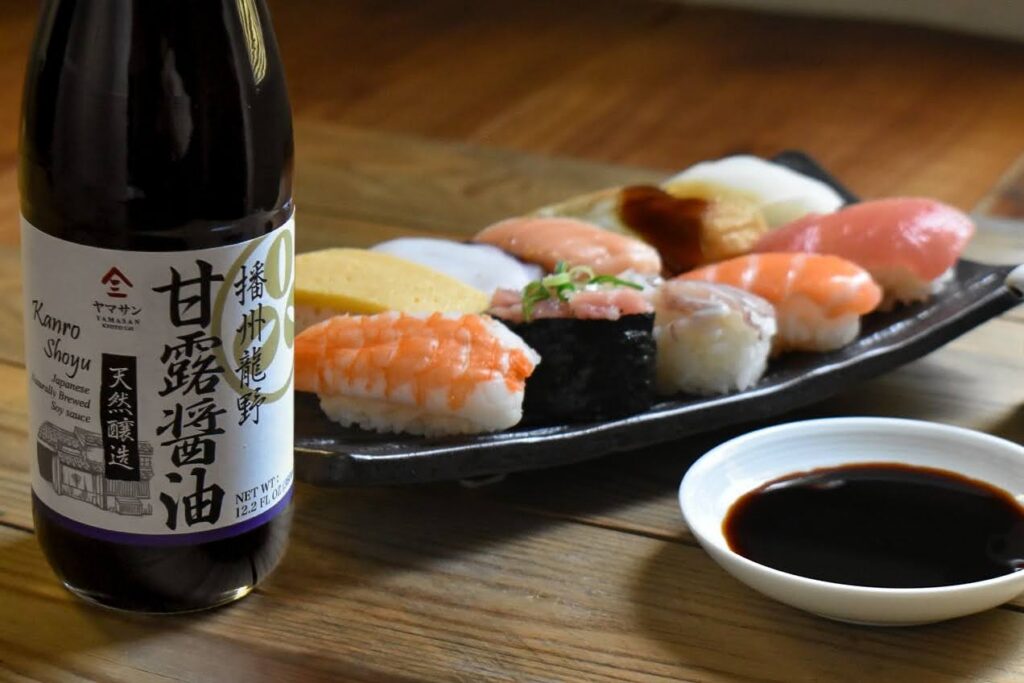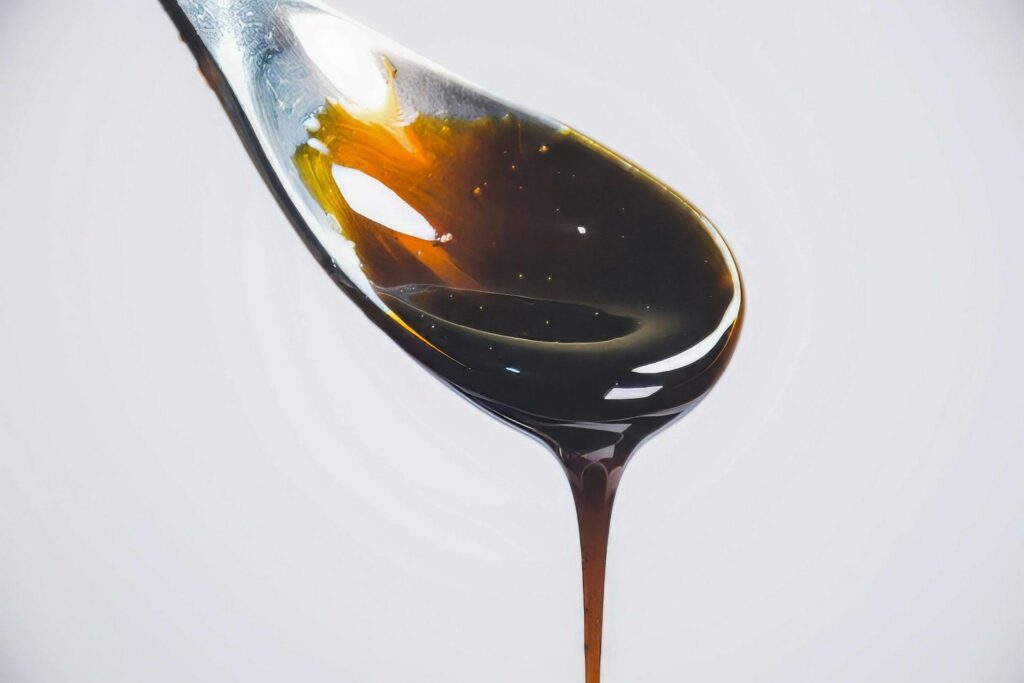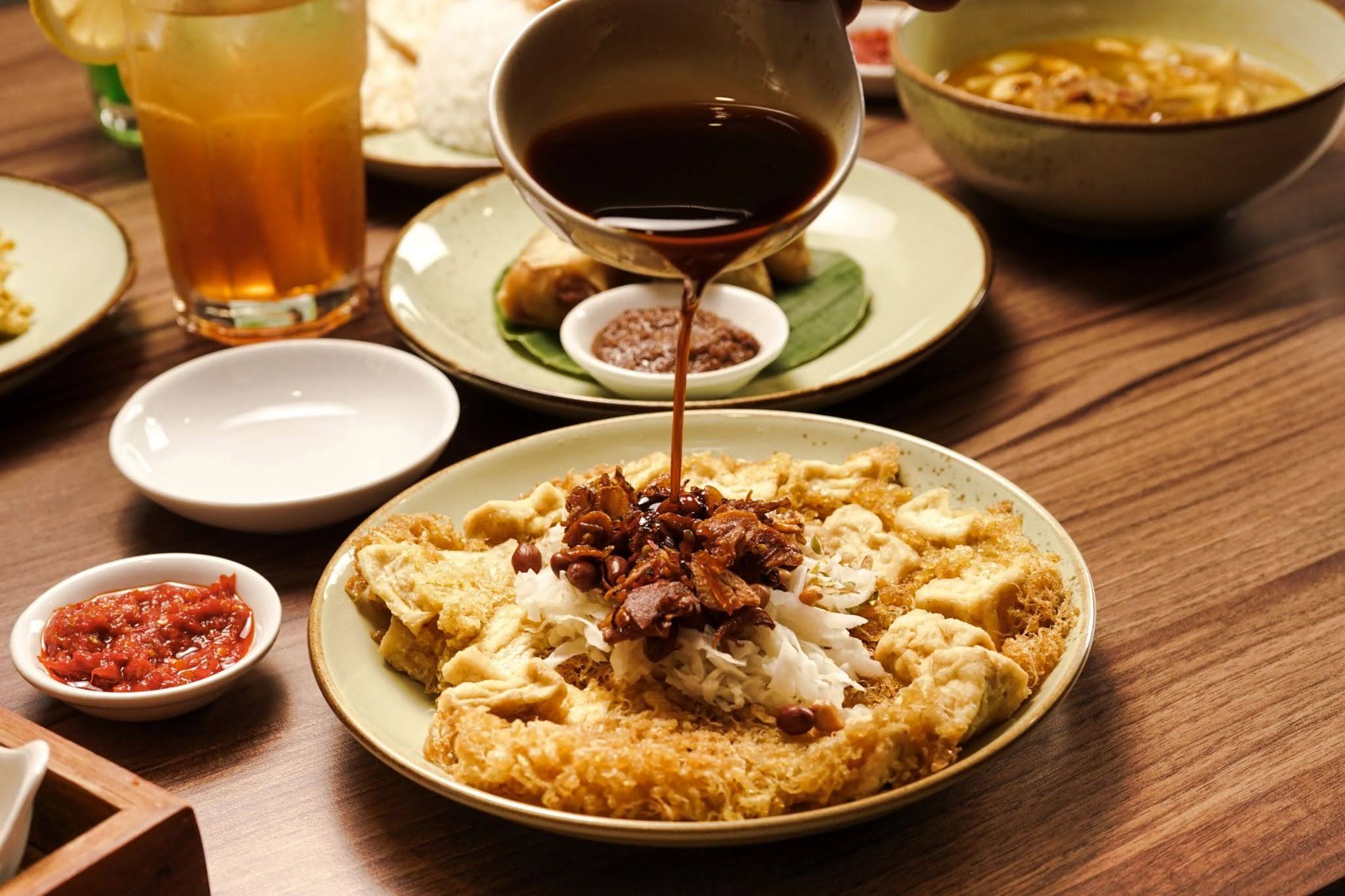
Across most of Asia, soy sauce is salty. Indonesia went a different way. Pour Japanese shoyu over rice and it disappears into the grain. Pour kecap manis and it puddles on top, glossy and slow, like warm molasses.
This dark, syrupy sauce is sweetened with palm sugar. It accounts for roughly 90% of Indonesia’s soy sauce production. Kecap manis isn’t a regional variant; in Indonesia, it IS soy sauce.
Two Words That Look the Same But Are Not
The Indonesian word kecap comes from the Hokkien kê-tsiap, the same root that gave English the word ketchup. The resemblance stops there.
Kecap manis (“sweet kecap”) is thick and viscous. It’s closer to molasses than to anything most non-Indonesians recognize as soy sauce.
Kecap asin (“salty kecap”) is the closer cousin to Chinese light soy sauce. It’s thinner, sharper, and works as a clean salting agent.
Unless a recipe says asin, kecap on its own means manis. That default tells you which bottle goes on the table.
What Palm Sugar Actually Does
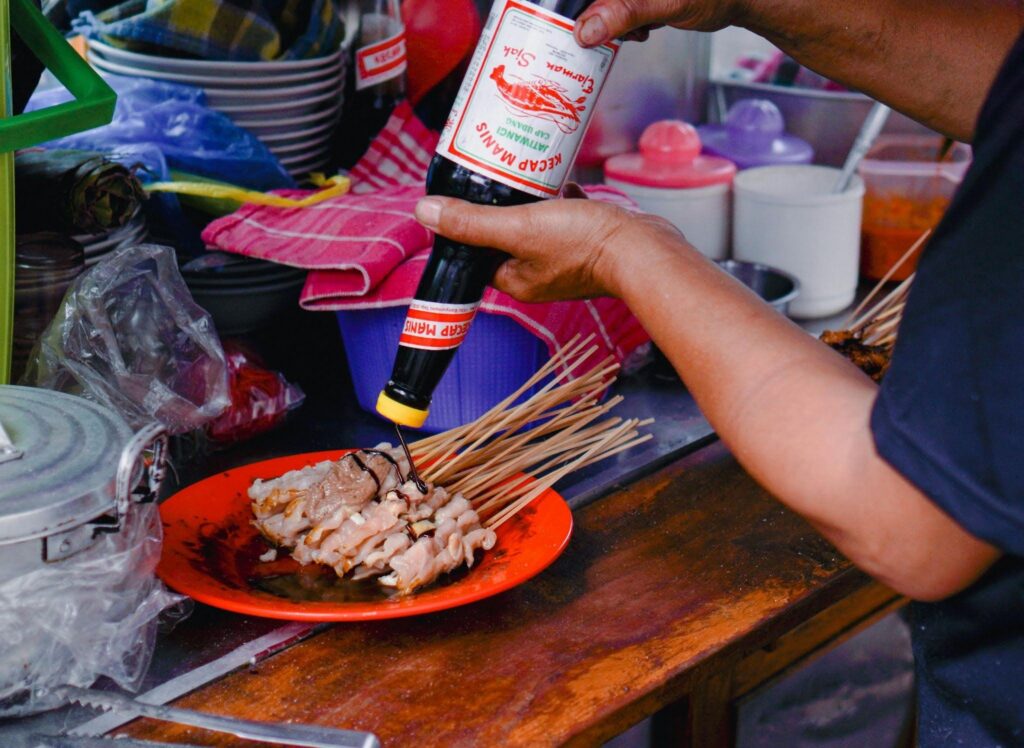
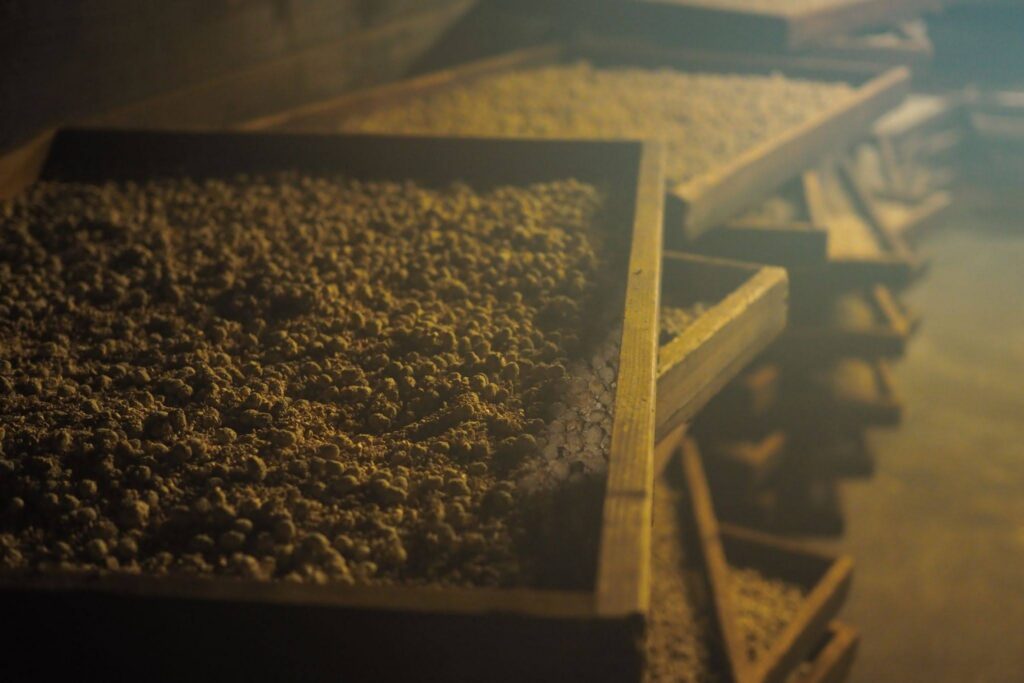
Up to the brine, kecap manis follows the same playbook as most naturally brewed soy sauce. Black soybeans (which Indonesia favors over yellow soybeans used in Japanese koikuchi) get cooked and mixed with roasted grain. They are then inoculated with an Aspergillus mold, fermented, and brined for months.
That’s the savory base. Almost nothing about the finished sauce’s identity is built there.
The identity gets built next, in a pot. Filtered brine meets gula jawa, the dark palm sugar tapped from the sap of the sugar palm (Arenga pinnata) or coconut palm. The mixture then simmers for hours.
Documentation of kecap manis production puts the palm sugar load as high as 50% of the final composition. That’s a ratio closer to a confection reduction than to a condiment.
During the boil, Maillard reactions fire across the surface. Sugars and amino acids collide. The color drives past brown into something near black. The air over the pot picks up the caramel-and-smoke aromatics that separate a real kecap manis from a Chinese tianmianjiang or a Japanese teriyaki. Star anise, coriander, and galangal thread through at low concentrations.
This is the part most newcomers miss. The fermentation builds the savory base. The boil with palm sugar builds nearly everything else; the weight on the spoon, the rounded sweetness, the near-black color, the perfume.
Reading the Label
That production split shows up at the grocery shelf. A bottle marked “kecap manis” can get there one of two ways:
- The traditional path: reduce a properly fermented kecap asin with palm sugar. It’s slow and expensive.
- The industrial shortcut: combine hydrolyzed soy protein with palm sugar or caramel coloring, then simmer it down.
Both end the same color. Only the first carries the layered, bitter-edged complexity fermentation produces. The cleanest tell is the label, soybeans and gula jawa near the top of the list with no hydrolyzed soy protein or corn syrup.
The country’s two giants take different shapes. Bango, founded in Tangerang in 1928 and now owned by Unilever Indonesia, runs a four-ingredient label: black Malika soybeans (a cultivar developed in partnership with Universitas Gadjah Mada), palm sugar, salt, and water.
ABC was founded in 1975 and has been majority-owned by Kraft Heinz since 1999. It distributes more broadly with a more conventional industrial formulation.
The Plate It Built
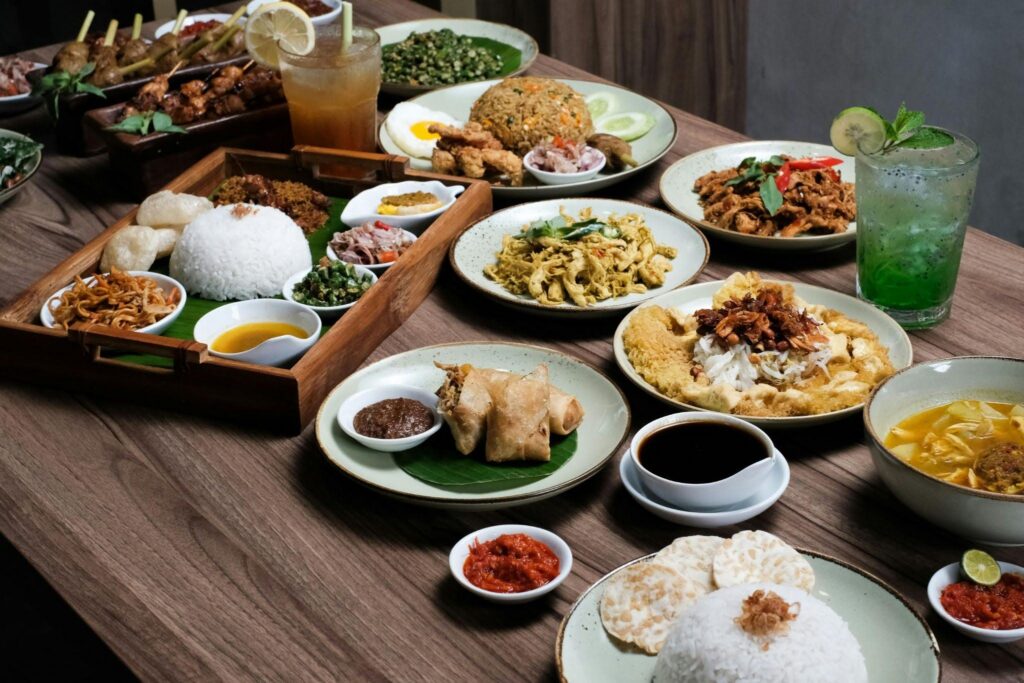
Kecap manis doesn’t sit at the edge of a dish the way Japanese shoyu often does. It builds the dish from the inside.
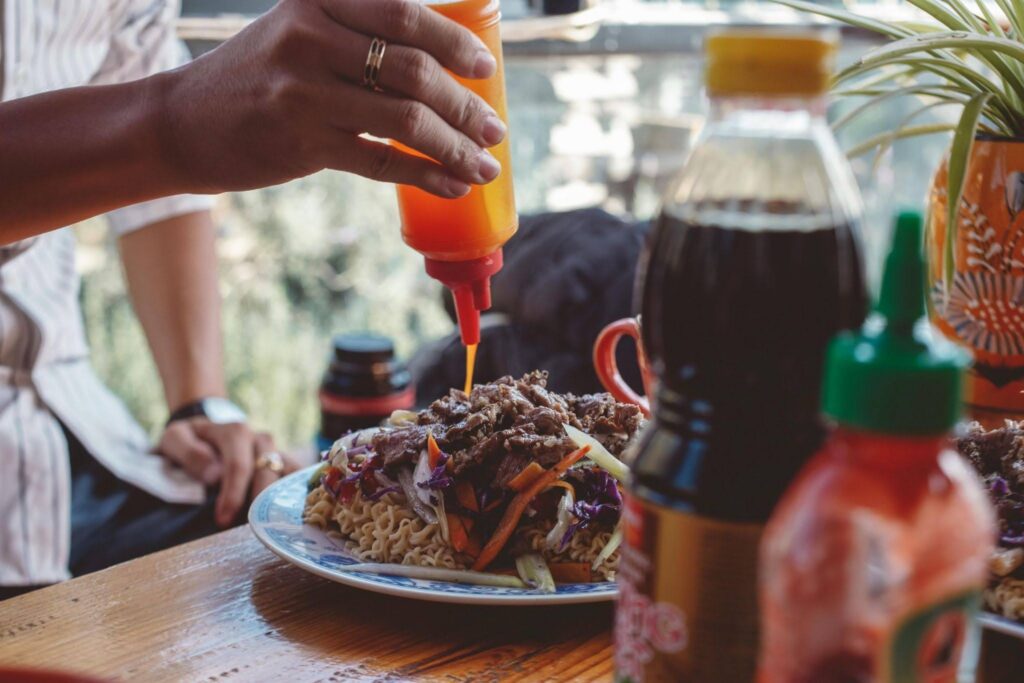
Nasi goreng, Indonesia’s national fried rice, gets its mahogany color and sweet-savory backbone from kecap manis stirred into the wok over high heat.
Sate, the country’s beloved skewered grilled meat, asks for it twice. First in the marinade, where the sugars caramelize against grill heat into a glossy crust. Then in the dipping sauce, where peanuts, chilies, and lime cut through the sweetness.
For non-Indonesian cooks: kecap manis isn’t a one-for-one swap for Japanese or Chinese soy sauce. A tablespoon carries 10 to 14 grams of sugar. Use it where sweetness has a job such as in glazes, marinades, anything you want to caramelize. Reach for kecap asin or Chinese light soy sauce when you want salt without the cargo.
Where the Default Goes Next
Outside Indonesia, the Netherlands, and a few Southeast Asian grocers, kecap manis is surprisingly hard to find, even as nasi goreng turns up on Western brunch menus.
The everyday sauce of roughly 285 million people sits, in most of the world, on a specialty shelf. Whether that changes has less to do with Indonesian producers than with how long the rest of the world keeps reading “soy sauce” and expecting only salt.