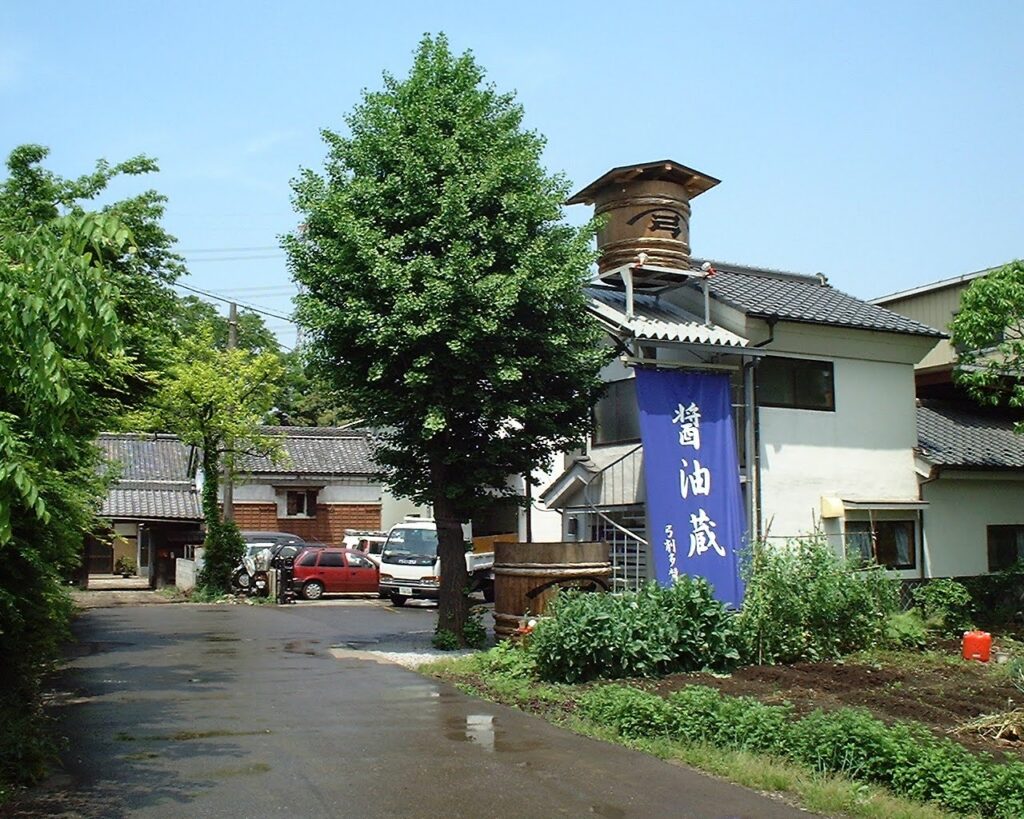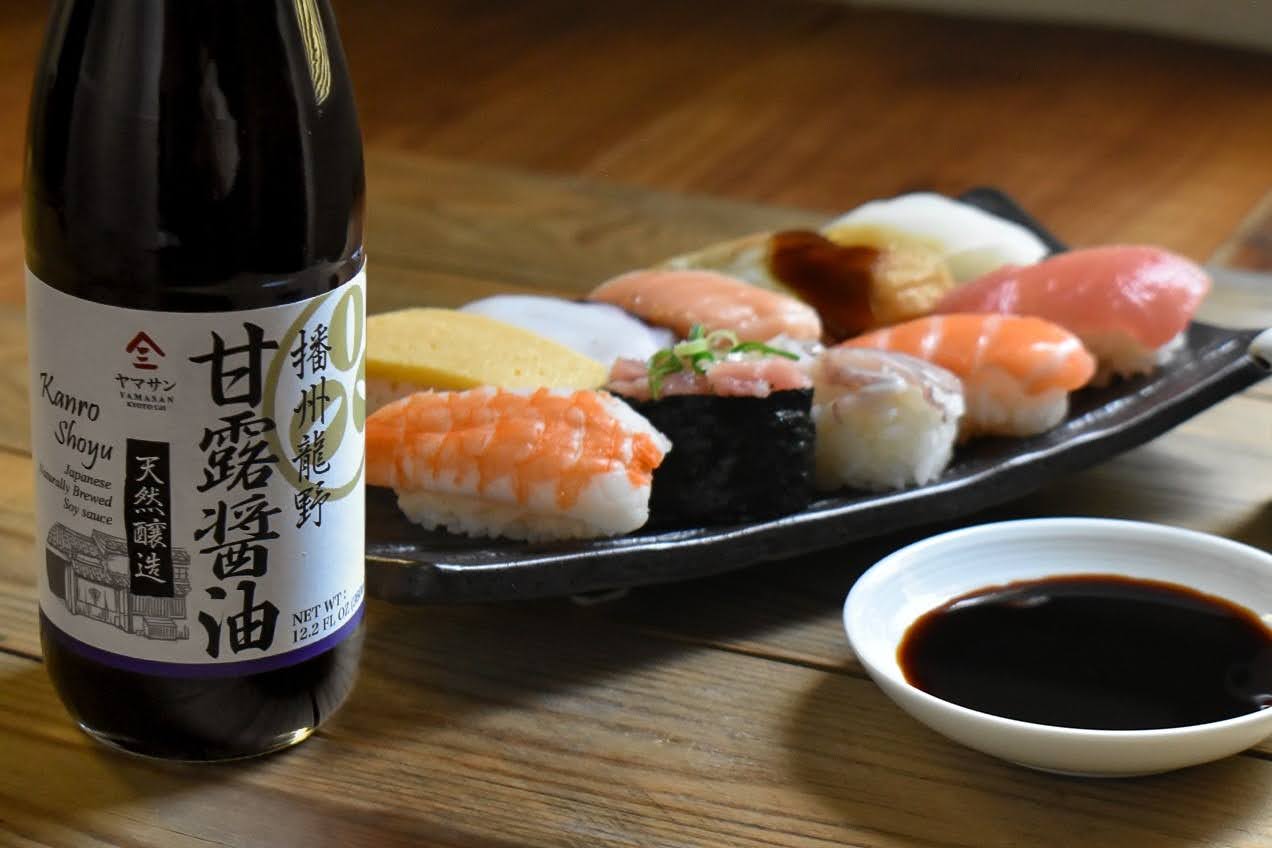
There’s a small brewery in Tatsuno City, Hyogo Prefecture, called Suehiro Shoyu. It has been brewing soy sauce for over 135 years. It doesn’t produce at scale. It doesn’t rush the process.
Its brewers don’t call what they do production. They call it cultivation; tending something alive, the way a farmer tends soil.
That mindset shapes every bottle the brewery makes: a double-brewed flagship aged over 1,000 days (Kanro), a tamari aged two years in wooden barrels, a smoked expression, an organic koikuchi, and a shiro shoyu designed to season without darkening. Not one additive. Not one shortcut.
YAMASAN Kyoto Uji works closely with Suehiro Shoyu to bring these sauces to customers around the world.
Kanro At a Glance: Yamasan’s Double Brewed Soy Sauce
| Characteristic | Yamasan Double Brewed Soy Sauce |
| Brewing Method | Naturally brewed |
| Aging Duration | 1,000+ days (~3 years / 12 seasons) |
| Fermentation Vessel | Stainless steel tanks |
| Soybean:Wheat Ratio | 50:50 |
| Ingredient Quality | Whole soybeans |
| Amino Acid Nitrogen | 2.00 g/100mL |
| Primary Taste Profile | Intense umami |
| Aroma Profile | Deep, rich |
| Regional Style | Saishikomi (double-brewed) |
| Recommended Uses | Sashimi, sushi, steak, grilled fish, finishing sauce for simmered dishes |
Where Soft Water and Four Seasons Do the Work
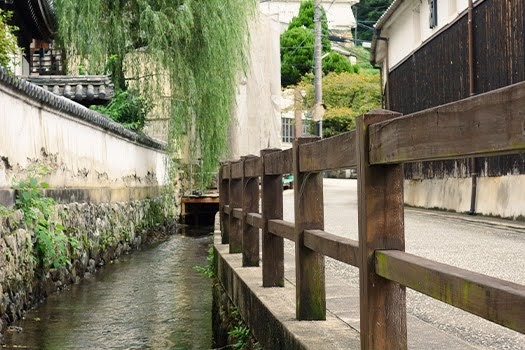
The Ibo River runs through the heart of Tatsuno — Japan’s soy sauce city, quietly producing for over 400 years
Tatsuno has been brewing soy sauce for over 400 years. It sits in Japan’s Seto Inland Sea region, wrapped by mountains and fed by the soft water of the Ibo River. It’s the birthplace of usukuchi, the light soy sauce that defines Kansai cooking, and one of Japan’s three most historically important soy sauce regions.
For the brewery, the location isn’t a detail on the label. It’s a working ingredient.
The mild climate shapes how the moromi mash develops through each season. The Ibo River, long valued in the region for its role in local soy sauce production, brings naturally soft water to the brewery. Its low mineral content lets fermentation run clean and slow.
Inside the brewery’s tanks, the real work happens invisibly. Yeasts and lactic acid bacteria have been living in that specific building for generations. They respond to each seasonal shift in ways no temperature-controlled system can replicate.
Shinya Kimura, of YAMASAN’s Product Planning and Development Team, put it clearly: “Our soy sauce is slowly aged using only koji and organisms from our wooden brewery. The brewer’s main task is to create the best environment for them.”
Kanro: Soy Sauce Brewed in Soy Sauce
Kanro Shoyu — naturally brewed, double-fermented, 1,000 days in the making.
The flagship is the double-brewed expression historically known in western Japan as kanro.
Here’s how it works. Standard koikuchi soy sauce mixes the moromi mash with saltwater brine. A saishikomi (classified by the Japanese Agricultural Standards (JAS) as double-brewed) skips the saltwater entirely. Instead, already-finished soy sauce takes its place. The mash ferments again, in a richer medium, for over 1,000 days across 12 seasons. YAMASAN says this style makes up roughly 1% of all soy sauce produced.
The result catches people off guard.
“Because it tastes sweet, it can sometimes be mistaken for a product that has sugars or other sweeteners added,” YAMASAN says.
It’s an easy mistake and completely wrong. That sweetness comes from time, not additives. When fermentation runs long enough, the amino acids and natural sugars in soybeans and wheat go through the Maillard reaction and develop into something layered and mellow. No sugar. No extras. Just the process doing what it does over three years.
YAMASAN recommends starting with sashimi, where the umami depth brings out the fish without competing with it, or steak, where the richness has room to settle.
The Range
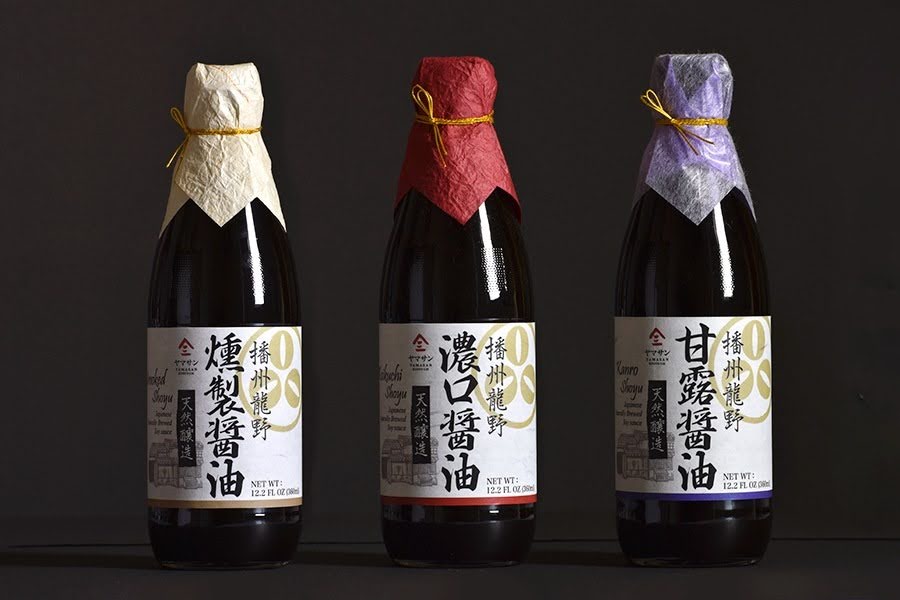
Smoked, koikuchi, and kanro: three styles, one building, no additives.
YAMASAN’s range doesn’t stop at Kanro. Beyond the flagship, four more styles come out of the same brewery, each shaped by the same philosophy: natural fermentation, no additives, no shortcuts.
The Premium Tamari contains no wheat. It ages for two years in wooden barrels and is pressed the traditional way; weighted lids apply slow, steady pressure to the moromi cloth. The flavor is deep and full-bodied. Where the Kanro is complex and layered, the tamari is direct.
The Smoked Soy Sauce starts as naturally brewed soy sauce, then gets slowly smoked over a blend of wood types for eight to nine hours. Getting real smoke depth without artificial additives is harder than it sounds as the wood blend, timing, and base sauce all have to work together. The result holds up well with Western ingredients: roast beef, steak, fresh cheese, carpaccio, olive oil.
The Organic Koikuchi is worth a closer look. About 97% of the soybeans used in Japan’s soy sauce industry are imported. The organic koikuchi uses 100% Japanese soybeans and wheat, grown without pesticides or chemical fertilizers. It’s a meaningful choice for a brewery that takes local sourcing seriously.
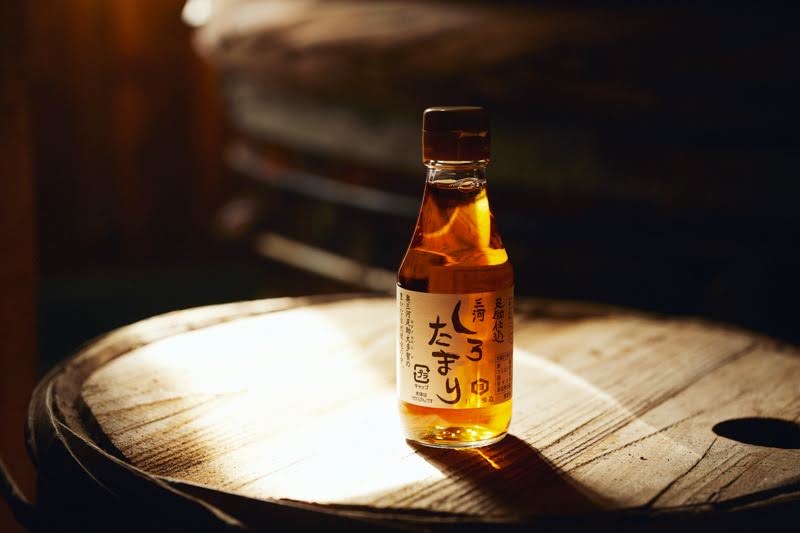
The White Soy Sauce (shiro shoyu) uses more wheat than soybean and ferments for a shorter time. The color is pale amber. The flavor is light. It seasons food without changing its color — useful in clear broths, delicate sauces, or any dish where appearance matters. YAMASAN also suggests blending it with milk, cream, and sugar to make a soy sauce milk jam.
What Hasn’t Changed
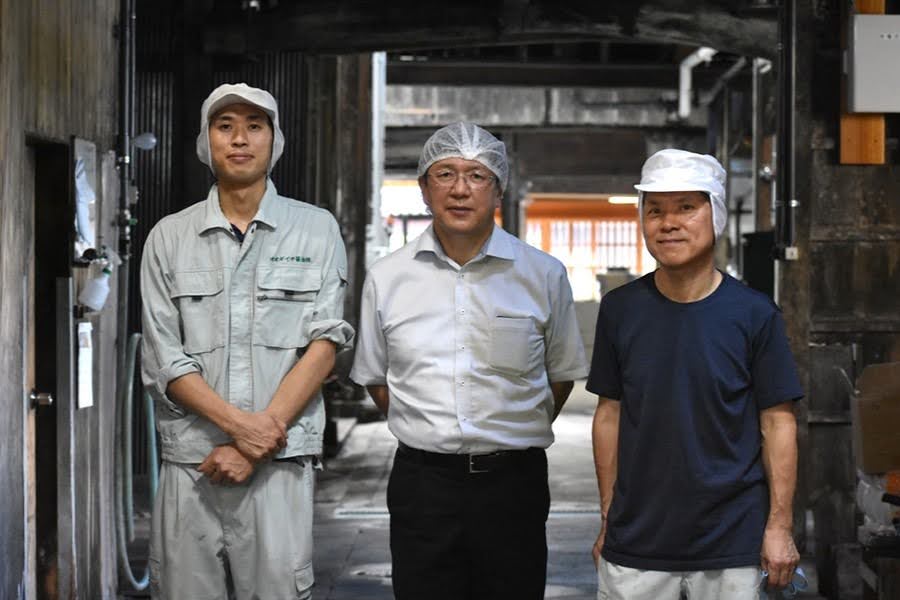
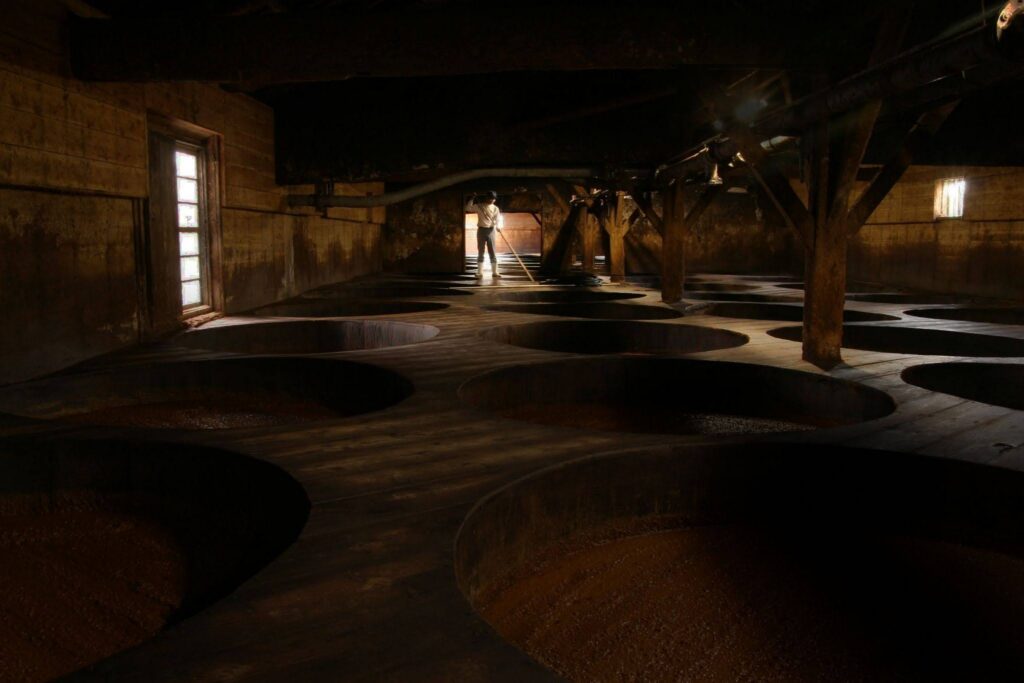
The people behind 135 years of cultivation. Inside the Suehiro Shoyu brewery in Tatsuno City.
Over a century in, the recipe is the same. Some tasks have moved to machines. The fundamentals haven’t.
“In order to pass on the yeast that has taken root in the brewery and the traditional brewing methods to the next generation, we will not be modernizing or mechanizing our manufacturing equipment,” YAMASAN says.
That’s not nostalgia. It’s practical. The yeast inside those tanks has been adapting to that specific building for generations. Change the equipment and you lose the culture it built. The flavor lives in the hardware.
YAMASAN puts it simply: “We do not manufacture but ‘cultivate’ the soy sauce.”
Cultivation means the brewer works around the process, not the other way. The 1,000 days can’t be cut short. The yeast runs on its own schedule. “While incorporating new technologies and knowledge, we keep firmly in mind what ‘must remain unchanged’ and ‘must be preserved and passed down'”, YAMASAN says. “Above all, we want to cherish the trust we have built with our customers throughout our history.”
YAMASAN’s full soy sauce range — including the Double Brewed (Kanro), Premium Tamari, Smoked, Organic, and White Soy Sauce — is available through the YAMASAN Kyoto Uji online store.
All images courtesy of YAMASAN Co., Ltd., 1-67, Uji, Uji-shi, Kyoto, Japan, 611-0021