By Keiko Kuroshima, the soy sauce sommelier
Soy sauce brewing is a fermentation culture shaped by microorganisms and Japan’s four seasons. Starting from soybeans, wheat, and salt, microorganisms, koji mold, lactic acid bacteria, and yeast work slowly alongside the changing seasons. Fermentation and maturation progress at their own pace, producing a soy sauce with deep umami and a complex aroma said to contain more than 300 distinct compounds.
1. Ingredient Preparation
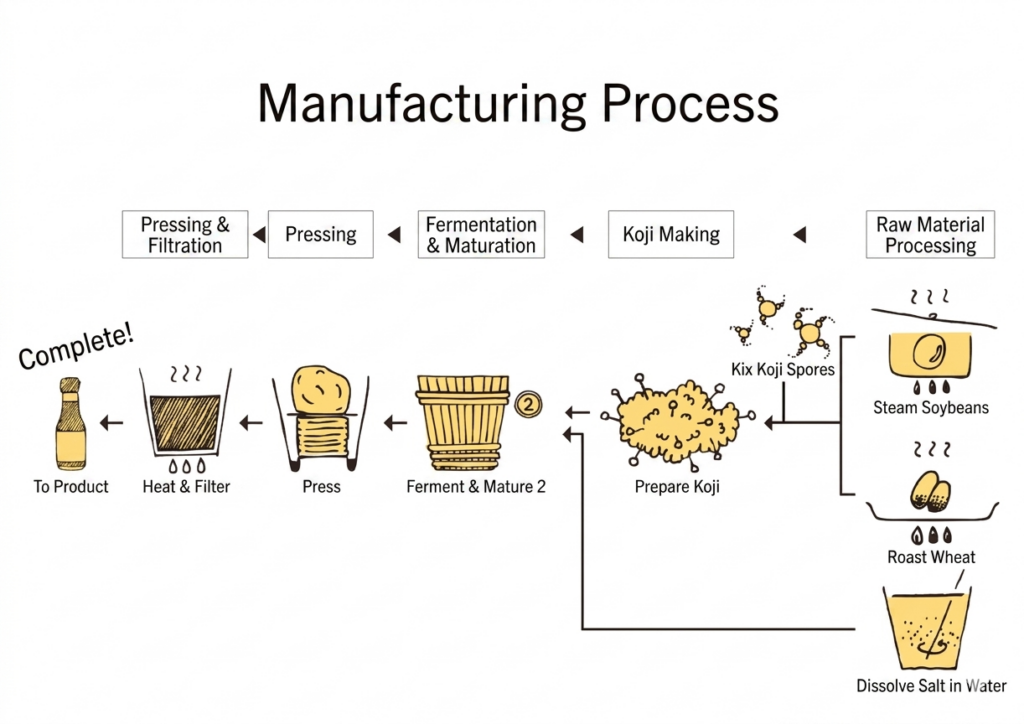
The three core ingredients are each prepared separately.
- Soybeans are washed, soaked to absorb the right amount of moisture, then steamed. Too little or too much moisture makes it harder for koji mold to develop properly, so reading the condition of the beans is essential.
- Wheat is roasted at high heat. This transforms the starches into a form koji mold can readily use, and cracking the roasted wheat encourages the mold to take hold. Roasting also develops the wheat’s toasted character.
- Salt is dissolved in water to create the brine used later in fermentation.
2. Koji Cultivation (Seikiku)
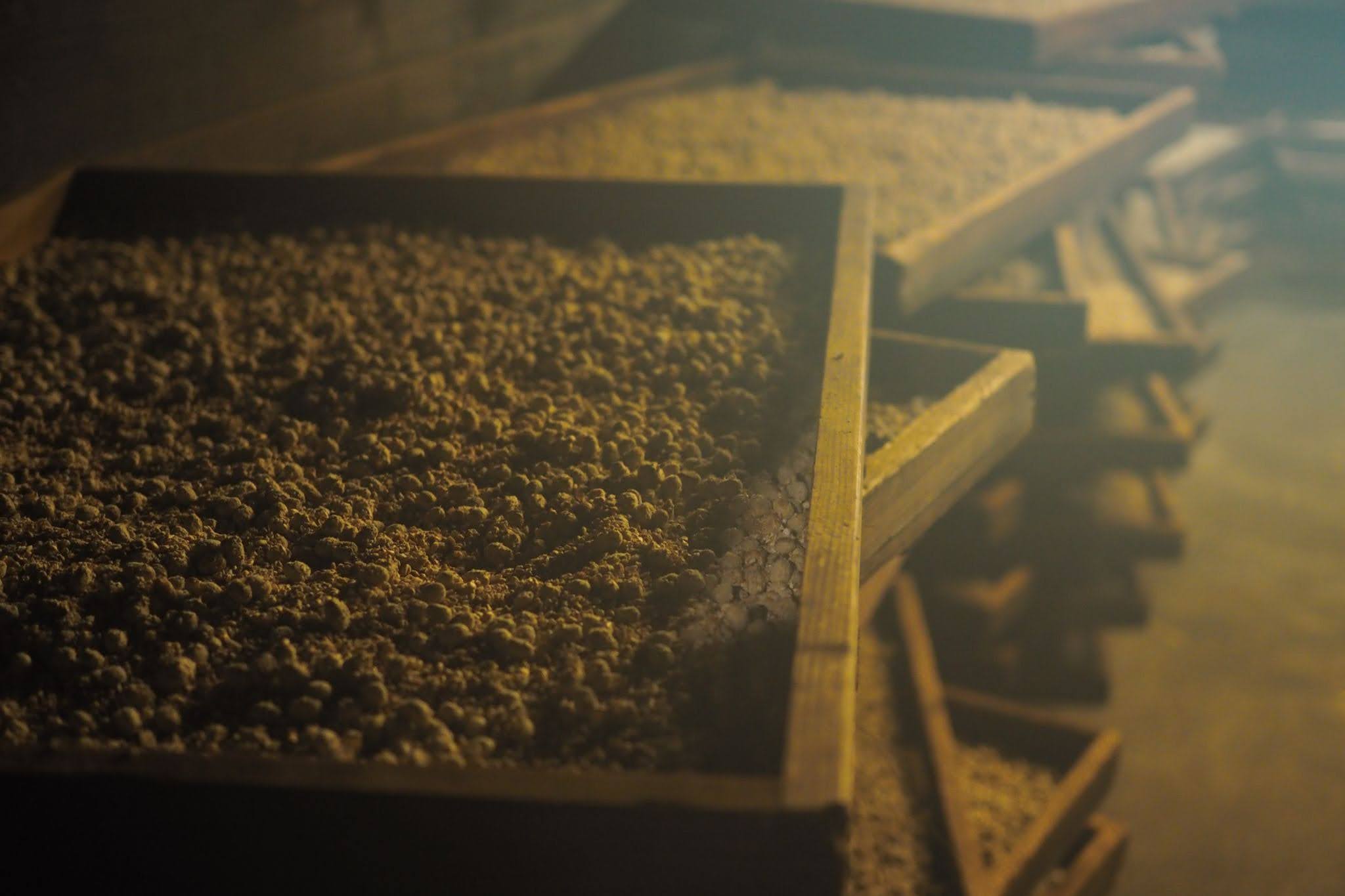
Steamed soybeans and roasted, cracked wheat are combined, inoculated with koji spores, and cultured in a dedicated room called a muro. The goal is to produce the enzymes that drive fermentation.
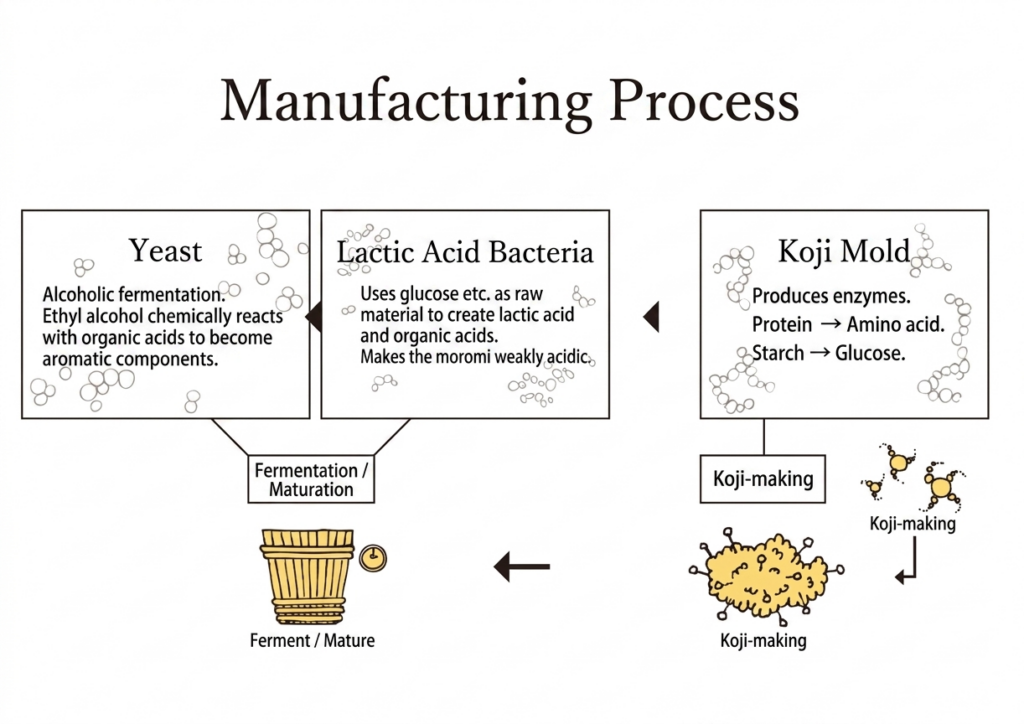
Those enzymes break down soybean protein into amino acids,the source of umami, and wheat starch into glucose, which contributes sweetness. Together, they form the flavor foundation of the soy sauce.
Koji cultivation takes around 45 hours. As the mold grows, it generates heat, so brewers periodically break up the mass to release it and maintain the right temperature and humidity throughout.
3. Fermentation and Maturation
When saltwater is added to the finished koji and loaded into fermentation vessels, it becomes moromi — the mash that slowly transforms into soy sauce over more than a year.
Lactic acid bacteria develop first, building acidity and depth. Yeast follows, producing alcohol and the aromatic compounds that give soy sauce its complexity. Late-stage yeasts then contribute the mature, aged notes that round out the finished sauce.
Throughout this process, brewers stir the moromi using long paddles (a practice called kai-ire) carefully managing conditions so each group of microorganisms can do its work.
4. Pressing
The fully matured moromi is wrapped in cloth and pressed slowly. Taking time here matters as a gradual press produces a cleaner, more refined soy sauce.
5. Hi-ire (Heat Treatment)
The pressed soy sauce is heated in a step called hi-ire. This serves three purposes:
- It stops microbial and enzymatic activity to stabilize the sauce.
- It develops aroma and adjusts color and flavor through heat.
- It causes proteins and insoluble compounds to coagulate, making them easier to separate as sediment.
6. Filtration
After hi-ire, the soy sauce rests in tanks for two to three days, allowing sediment to settle. It’s then filtered, and the result is a clear, finished soy sauce.