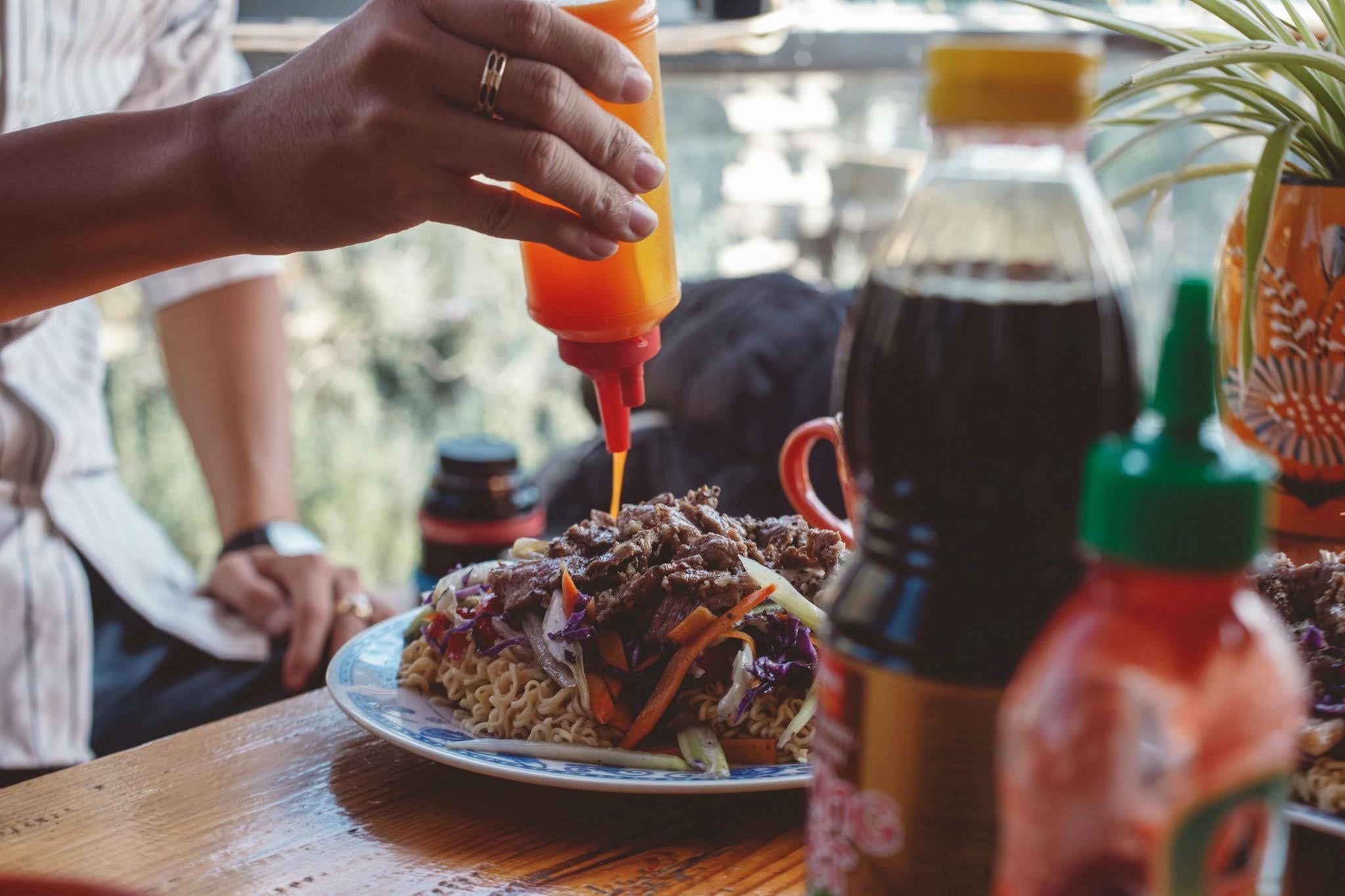
The Thai soy sauce aisle isn’t built for shortcuts. Four bottles sit side by side, all under nearly identical labels:
- See ew khao — light soy sauce
- See ew dam — dark soy sauce
- See ew wan — sweet soy sauce
- Sauce prung rot — seasoning sauce
Grab the wrong one and the dish will look almost right and taste definitely wrong. Thai soy sauce isn’t really a category. It’s a system. And its rules don’t map cleanly onto Chinese or Japanese conventions.
See Ew Khao: The Workhorse
See ew khao means “white soy sauce.” It’s Thai light soy sauce, and it does most of the daily lifting. The color is a thin, brown-amber. The taste is salt-forward with a mild fermented sweetness.
It works a lot like Chinese sheng chou: the seasoning a cook reaches for first. Use it for stir-fries, marinades, and dipping mixes. What sets it apart from its Chinese counterpart is restraint. Less salt, a softer aroma, easier to layer with the fish sauce, palm sugar, and lime that anchor Thai cooking.
Healthy Boy, made by Yan Wal Yun in Bangkok since 1947, anchors most Thai pantries. Dragonfly, from Kwong Hung Seng, holds the dark and sweet end of the same shelf. Between them, they account for most of the bottles in nearly every Thai kitchen — and the starting point for understanding everything else.
See Ew Dam: Dark, but Not the Way You Think
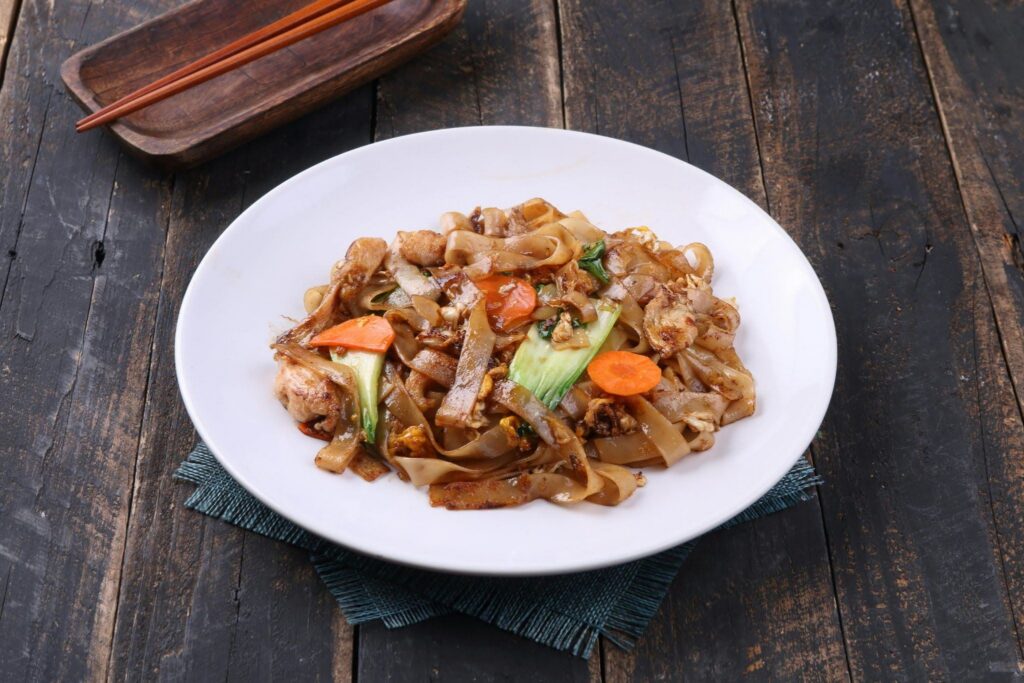
See ew dam is Thai dark soy sauce. This is where intuition built on Chinese cooking gets a cook into trouble.
Chinese lao chou is dark, thick, and lightly sweet from caramel. Thai dark soy sauce goes further. It’s darker, thicker, and noticeably sweet, built on molasses or palm sugar. In spirit, it’s closer to Indonesian kecap manis than to anything from Guangdong.
You see it most clearly in pad see ew, the wide rice noodle dish named after the sauce. That mahogany gloss on the noodles isn’t food coloring. It’s sugar caramelizing in a hot wok with soy underneath. A teaspoon is usually enough. The job is color, sheen, and a low backbeat of sweetness, never the salt base.
See Ew Wan: When Sweetness Becomes the Point
See ew wan, sweet soy sauce, takes the dark version further. Palm sugar dominates. The sauce pours like thin syrup and reads more like a condiment than a seasoning.
It belongs on the table, not in the pan. Drizzled over grilled meats. Stirred into dipping sauces. Thinned with lime and chiles for moo ping.
Here’s the logic. Thai cooking pulls flavor along four axes; salty, sweet, sour, spicy. Sweet soy sauce delivers two of those notes at once. That’s why it keeps its spot on the shelf, even though most cooks outside Thailand never buy it.
The Bottle That Isn’t Soy Sauce
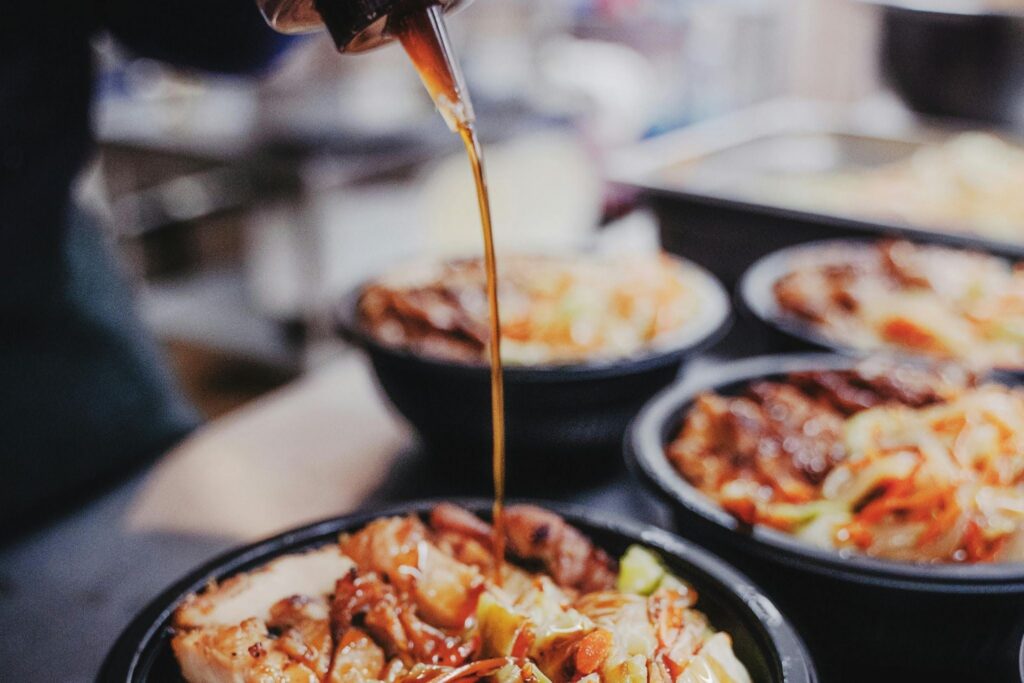
The fourth bottle confuses everyone. Thai seasoning sauce, sauce prung rot, is sold under labels like Golden Mountain and Maggi. It looks like soy sauce. It gets used like soy sauce. Technically, it isn’t.
It’s a soy-based seasoning made from hydrolyzed soy protein, salt, and sugar. There’s no koji-driven fermentation, which is what defines naturally brewed varieties. The flavor lands sharper and more concentrated, closer to roasted beef broth than to fermented bean.
The distinction is built into Thai law. The Ministry of Public Health’s Notification No. 202 splits fermented and hydrolyzed soybean seasonings into separate regulatory classes, with different labeling rules, even though the two bottles sit a foot apart on the shelf.
Golden Mountain is the right tool for what it does. It just isn’t see ew khao. Treating the two as interchangeable collapses a distinction Thai cooking has spent generations refining.
The Logic on the Shelf
Nothing shows how easily the system gets misread better than pad thai. It’s the most-recognized Thai dish outside Thailand. It’s the one Western cooks reach for soy sauce to make. And traditional pad thai uses none of these four bottles.
The real base is tamarind, fish sauce, and palm sugar. Recipes that lean on soy sauce are working around the harder ingredient, and the dish loses its sourness in the trade. The instinct to reach for “soy sauce” is the same instinct that grabs the wrong one of four in a Bangkok kitchen. A system flattened into a single bottle.
That instinct misses what Thai cooking is doing. Flavor pulls along four axes; salty, sweet, sour, spicy, and refuses to let one stand in for another. A Thai table carries fish sauce and lime and chiles and sugar, not a single bottle of “Thai seasoning.” The soy sauce shelf works the same way. Four tools, four jobs. No flavor in Thai cooking does anyone else’s work.
Thailand doesn’t grade soy sauce the way Japan grades shoyu under its Japanese Agricultural Standards (JAS). There’s no premium tier on the label to lean on. The cook reads the four bottles instead. And reading them, really reading them, turns out to be a small lesson in how Thai cooking thinks.