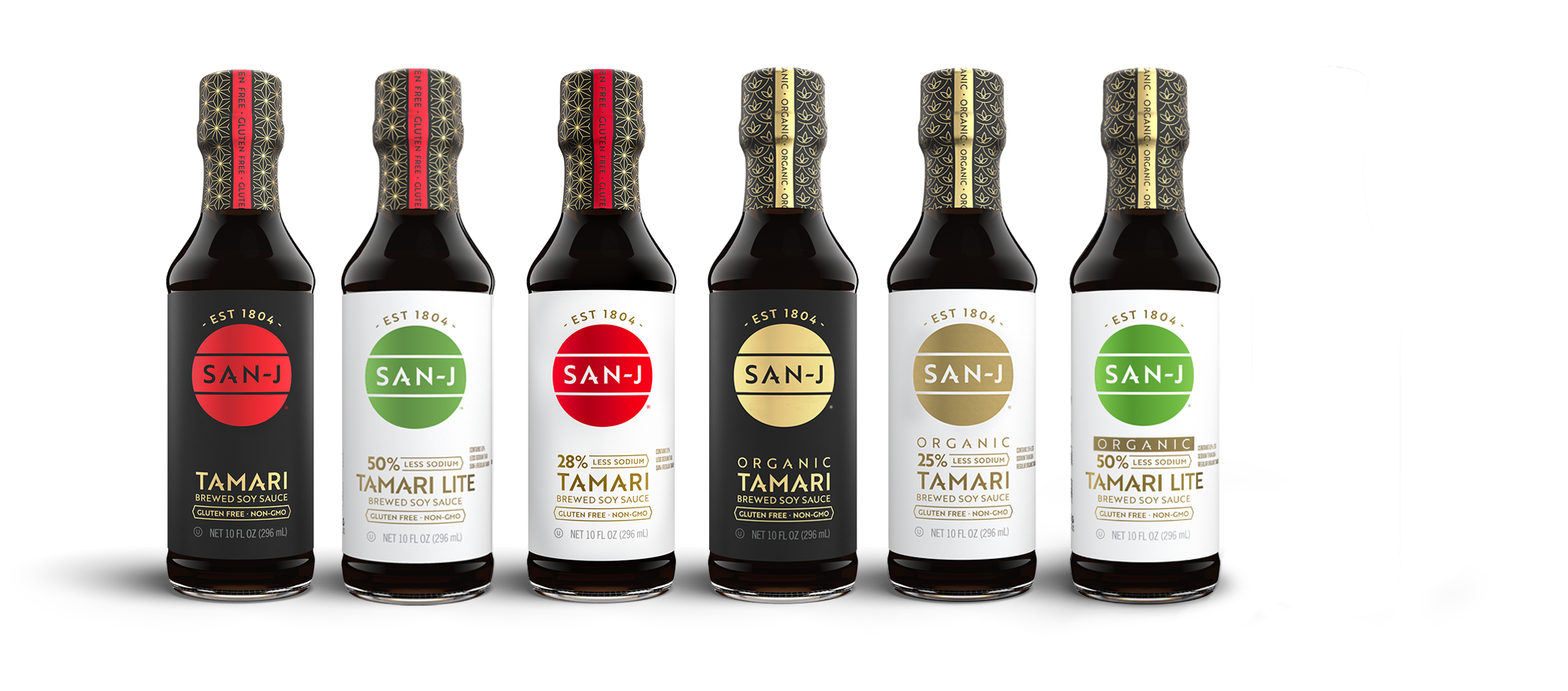
Most soy sauce on an American grocery shelf is brewed from roughly equal parts soybeans and wheat. San-J Organic Tamari contains none of the latter. That single decision — 100% soybeans, no wheat, no exceptions — has defined this Virginia-based brewery for over 220 years, across eight generations of the same family, through a founding in Japan and a brewery built from scratch in Richmond.
Two centuries is a long time to make one thing. San-J hasn’t diversified into dozens of styles or chased every trend in the soy sauce market. It has made tamari, gotten very good at it, and kept going. That focus is the story.
At a Glance: San-J Organic Tamari
| Characteristic | San-J Organic Tamari |
| Brewing Method | Naturally brewed |
| Aging Duration | 5–6 months |
| Fermentation Vessel | FRP tanks |
| Soybean:Wheat Ratio | 100:0 (no wheat) |
| Ingredient Quality | Organic whole soybeans |
| Amino Acid Nitrogen | 2.2 g/100mL |
| Primary Taste Profile | Bold umami, complex |
| Aroma Profile | Mild caramel |
| Regional Style | Tamari |
| Recommended Uses | Finishing sauce, sashimi, braising, teriyaki |
Not a Substitute. A Style.
Here’s a misconception worth clearing up before going any further: tamari is not a soy sauce alternative. It is a soy sauce — specifically, one of five styles recognized under the Japanese Agricultural Standard (JAS), brewed primarily from soybeans with no wheat added.
The “gluten-free alternative” framing isn’t wrong, exactly — tamari is often wheat-free, and that matters for a lot of people. But calling it an alternative is a bit like calling rye bread a gluten-free alternative to sourdough. It misses the point of what it actually is.
San-J has been making tamari in its most soybean-forward form — 100% soybeans, zero wheat — since before the United States was a century old. When they say they’ve specialized in authentic tamari brewing, they mean it in the most literal sense possible.
What Happens When You Take the Wheat Out
Removing wheat from the brewing mash isn’t a subtraction — it’s a complete reorientation of how fermentation works. Soybeans are substantially richer in protein than wheat, so when the mash is built entirely from soybeans, the fermentation process concentrates almost entirely on breaking down that protein into amino acids. More amino acids means more umami. That’s the short version.
The longer version involves San-J’s water ratio. Conventional soy sauce producers typically use about 1.3 times as much water as solid ingredients in the mash. San-J uses 0.9 — a drier, denser moromi that ferments into something more concentrated and full-bodied than standard soy sauce. The amino acid nitrogen content of the finished tamari lands at 2.2 grams per 100 milliliters, which is notably high and reflects directly in the flavor.
None of that is an accident. It’s the compounded result of eight generations of people making the same adjustments, learning what works, and refusing to undo it.
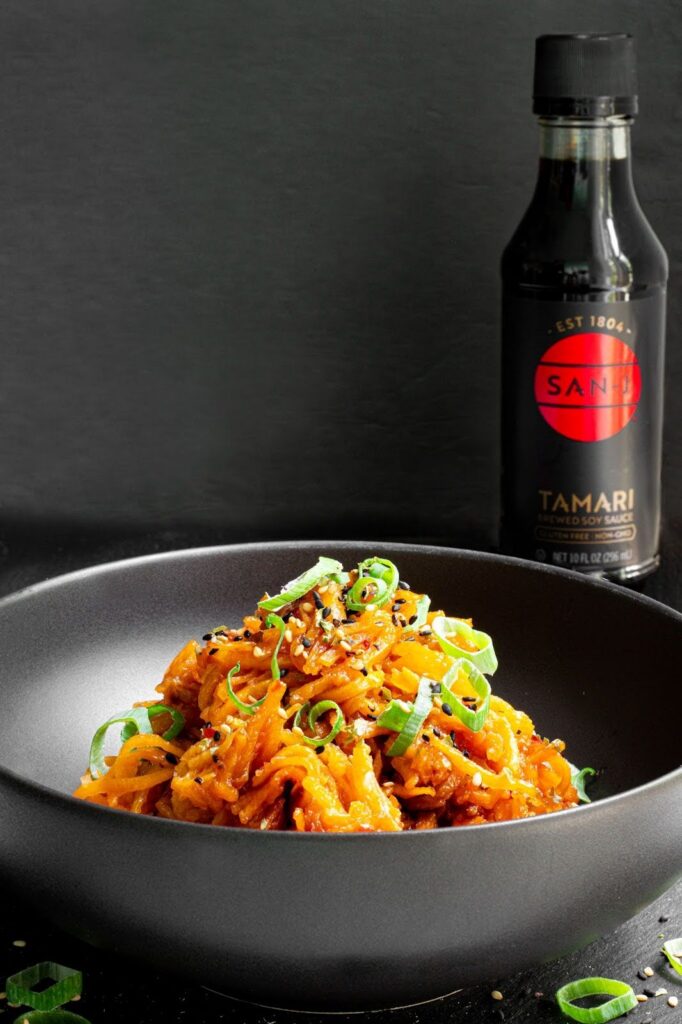
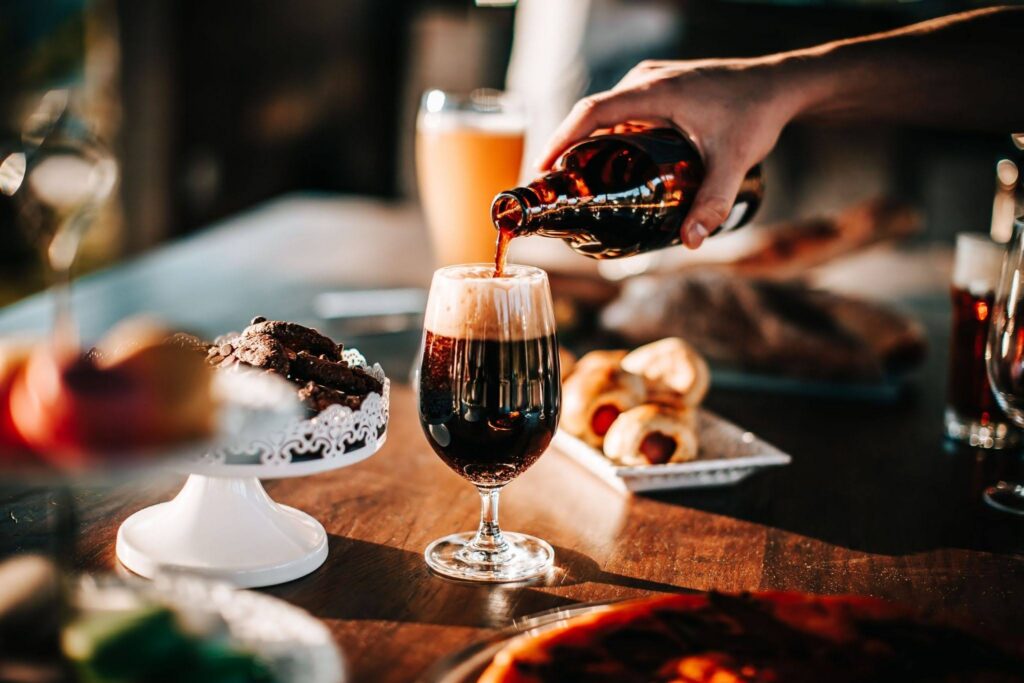
San-J Tamari doing visible work — the kind of dish that makes the case better than any ingredient list could.
You Can’t Rush It
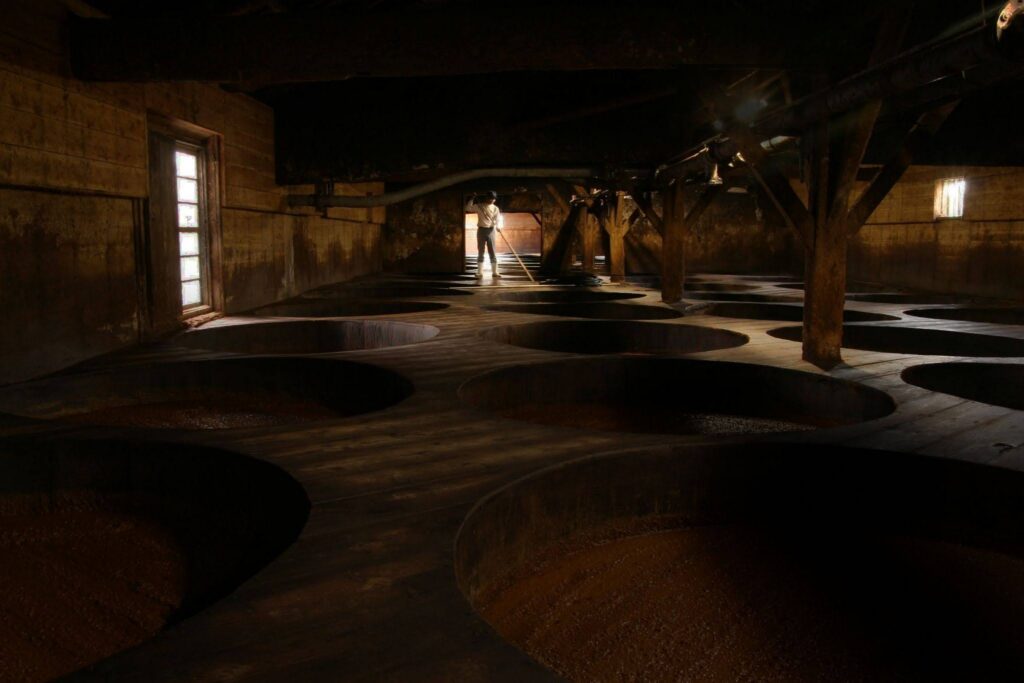
Inside San-J’s fermentation tanks, koji — the mold culture at the heart of every naturally brewed soy sauce — works through the soybean mash over five to six months. There’s no switch to flip, no dial to turn up. The flavor develops on its own schedule.
San-J is refreshingly direct about what that means in practice. Demand occasionally runs ahead of what’s ready to ship. The temptation to move product early is real. Their answer is better production planning — not shorter fermentation.
“Tamari’s depth of flavor can only be developed through a proper fermentation process, and that takes time,” the company says. “You can’t rush it without compromising what makes SAN-J Tamari taste like SAN-J.”
It’s the kind of statement that sounds obvious until you consider how rarely producers actually hold that line when supply gets tight.
Richmond, Virginia — by Calculation
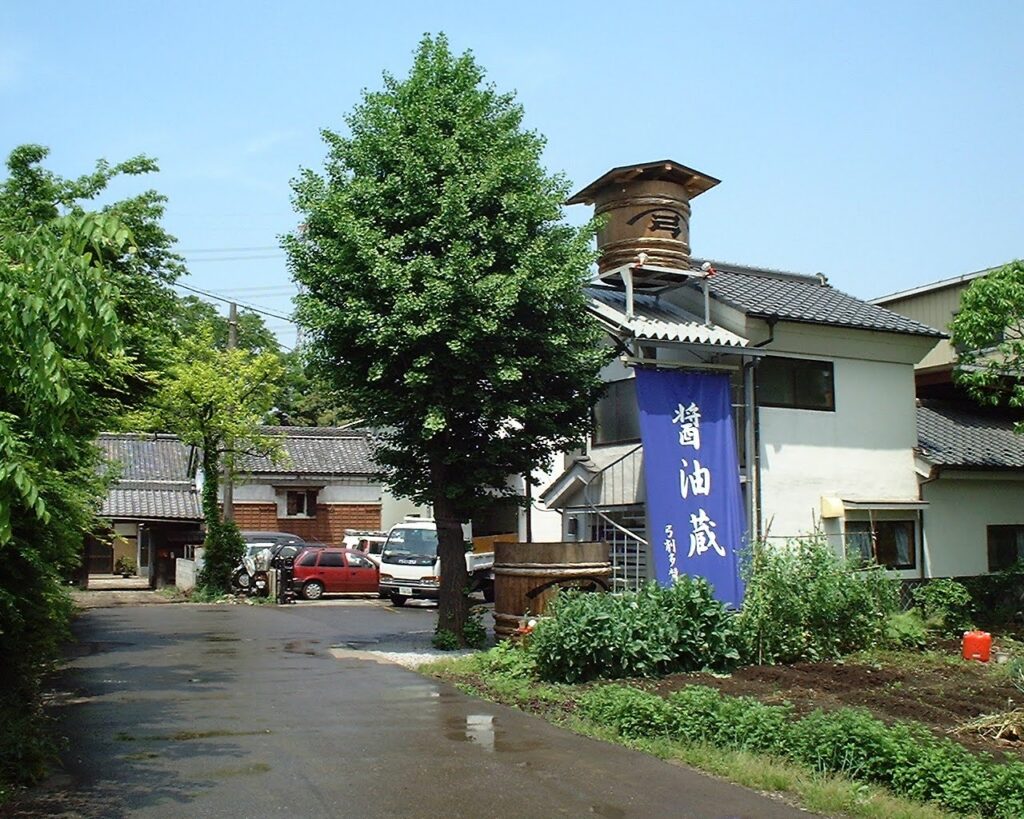
When San-J built its American brewery in Richmond, the choice of Virginia wasn’t an accident of real estate availability. The state’s four distinct seasons and humidity levels closely resemble those of the Japanese region where the family’s brewing tradition began. Since fermentation is sensitive to ambient conditions — seasonal temperature swings, moisture in the air, the microbial character of a specific place — operating in a familiar climate meant San-J could apply methods developed over generations without having to relearn them in a foreign environment.
There’s something almost counterintuitive about it: a Japanese tamari producer choosing Virginia for its weather. But that’s what a serious commitment to consistency looks like. It means thinking about the brewery’s relationship to its surroundings, not just its equipment.
What It Tastes Like, and Where It Belongs
San-J Organic Tamari has a mild caramel aroma, a slightly thicker texture than standard soy sauce, and a flavor profile centered on deep, sustained umami with minimal sweetness. The absence of wheat makes it cleaner on the finish — less of the subtle grain-forward sweetness that conventional soy sauce carries.
That profile makes it particularly well-suited to applications where the sauce is doing visible work. On high-quality sashimi, it lets the fish lead while reinforcing its natural richness. In braised beef — especially with red wine — it integrates into the liquid and builds the kind of layered, savory depth that a flat soy sauce won’t. With steak and a touch of wasabi, it enhances without overwhelming.
It’s a tamari that rewards restraint. A finishing drizzle, a dipping bowl, a splash into a braise just before it reduces. Used that way, the difference between it and a commodity soy sauce is hard to miss.
Eight Generations, One Style
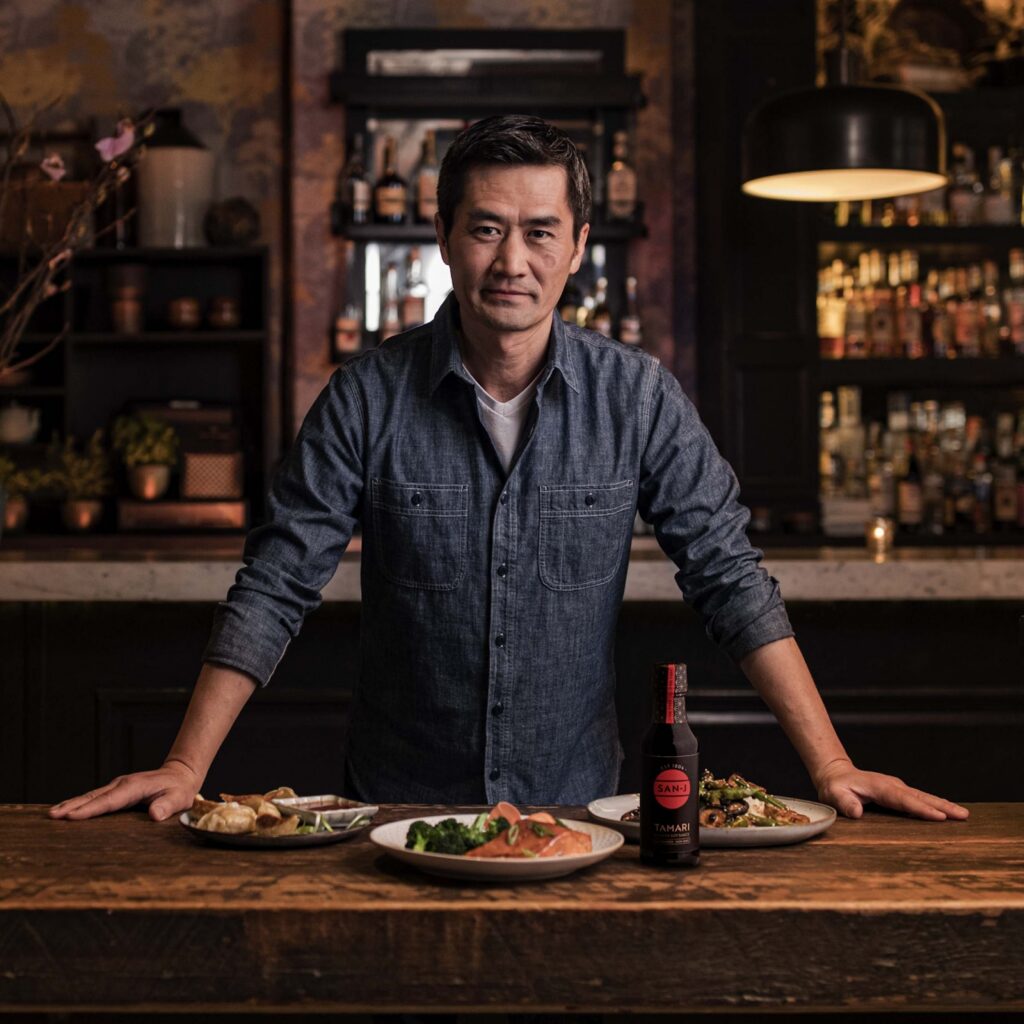
Takashi Sato, eighth-generation president of San-J International — the person currently responsible for making sure the next generation inherits something worth inheriting.
The person currently carrying that 220-year legacy is Takashi Sato, Tokyo-born and Keio University-educated, who took the helm as the eighth-generation president of San-J International. His father built the Richmond facility in 1987; Sato has since grown it into a brand available in all 50 states, while also founding Hakko Hub, an educational platform dedicated to expanding awareness of fermentation culture in the United States and beyond. He is, in other words, someone who thinks about tamari not just as a product to sell but as a tradition to sustain.
San-J recently launched Tomato Tamari and Rice Shoyu under its TAMARIMANIAC premium line — experimental products that show a brewery willing to push against its own conventions. But that kind of experimentation only makes sense from a foundation as deep as San-J’s. You have to understand tamari at a fundamental level before you can productively mess with it. Sato’s framing of that balance is precise:
“At San-J, our tamari is rooted in eight generations of fermentation expertise. We honor traditional Japanese craftsmanship while evolving for today’s market. By combining premium ingredients with time-honored knowledge, we create tamari that stays true to our values and uncompromising standards, bringing thoughtful innovation and new excitement to consumers without sacrificing authenticity.”
— Takashi Sato, President, San-J International
What hasn’t changed — and what won’t change — is the core of the process: the all-soybean mash, the concentrated moromi, the time commitment, the family methods carried across eight generations and two countries. Modern equipment has made the process safer and more controlled. It hasn’t made it faster or simpler, because faster and simpler would make it something else.
That’s the argument San-J has been making, implicitly, for 220 years. The tamari in the bottle is the evidence.
San-J Organic Tamari is available at major retailers across the United States. The TAMARIMANIAC premium line, including Tomato Tamari and Rice Shoyu, is available exclusively at shop.san-j.com.
All images courtesy of San-J International, Inc., unless otherwise noted.