Yasuo Yamamoto will be the first to tell you that humans don’t make soy sauce. The microbes do. A brewer’s job, as he sees it, is to show up — to tend the barrels, manage the conditions, and stay out of the way while something older and more patient than people does the actual work.
That philosophy has earned Yamamoto an unusual amount of attention for a man who runs a 50,000-liter-per-year operation on a small island in the Seto Inland Sea. CNN, the BBC, Netflix, The Wall Street Journal, Business Insider, and Nas Daily have all covered Yamaroku Shoyu — a remarkable roster for a brewery where one man oversees every step of production, from koji cultivation to bottling. The Japan Times has profiled him more than once. He is, by any measure, one of the most recognized figures in traditional soy sauce brewing. And yet Yamamoto, the fifth-generation head of Yamaroku Shoyu, insists the credit goes elsewhere.
At a Glance: Yamaroku Tsuru Bishio
| Characteristic | Yamaroku Tsuru Bishio |
| Brewing Method | Naturally brewed |
| Aging Duration | 4 years |
| Fermentation Vessel | Kioke cedar barrels |
| Soybean:Wheat Ratio | 52:48 |
| Ingredient Quality | Whole soybeans from Toyama and Yamagata; wheat from Hokkaido |
| Amino Acid Nitrogen | 2.3–2.4 g/100mL |
| Primary Taste Profile | Intense umami |
| Aroma Profile | Caramel, sweet aroma |
| Regional Style | Saishikomi (double-fermented) |
| Recommended Uses | Sashimi, steak, red meat, vanilla ice cream |
| Salt-Free Solids | 30 g/100mL |
| Koji Cultivation Time | 44 hours |
| Production Volume | 50,000 liters/year |
| Certifications | Vegan, Kosher |
Twice Brewed, Four Years in the Making
Tsuru Bishio is a saishikomi — classified under the Japanese Agricultural Standard (JAS) as a double-fermented style of soy sauce, and one of the most time-intensive to produce. Very few breweries still make it at scale. At Yamaroku, the process runs for four years — a commitment that is, in Yamamoto’s own words, impossible to evaluate through numbers alone.
At Yamaroku, all of this happens inside kioke: cedar barrels holding between 3,000 and 6,000 liters each. The moromi house that shelters them was built over a century ago and is registered as a Tangible Cultural Property of Japan. Its walls, earthen floor, and the wood of the barrels themselves are home to more than 100 types of yeast and lactic acid bacteria — microorganisms that cannot be purchased, imported, or synthesized. They’ve been accumulating in this specific building for generations, and they are, in Yamamoto’s view, the actual brewers.
“Each brewery has a unique ecosystem of microorganisms living in the building and in the wooden barrels, which change the fermentation process and give soy sauce a special taste,” Yamamoto explains. “No microorganisms are added during the fermentation process. They all live naturally in the unique ecosystem of the brewery.”
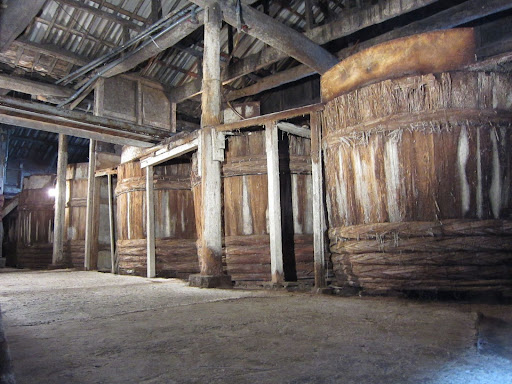
Inside the century-old moromi house — rows of kioke cedar barrels recede into the dim light, their wood darkened by generations of fermentation
“It is not the humans who make soy sauce. Microbes make soy sauce. Humans only accompany microbes in their work of fermentation.”
— Yamamoto Yasuo, Head of Yamaroku Shoyu
That sentence reframes everything about how Yamaroku operates. Yamamoto’s role isn’t to manufacture a consistent product through controlled inputs — it’s to maintain a living environment in which microorganisms can do what they’ve always done. Consistency, here, isn’t a spreadsheet metric. It’s sensory. The barrels, the building, and the island are not separate from the product. They are the product.
The Color Is Not the Salt
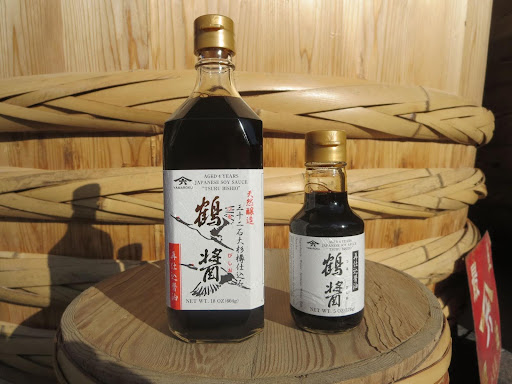
The 18 oz and 5 oz bottles of Tsuru Bishio side by side
The most common misconception about Tsuru Bishio is a simple visual one: the sauce is very dark, so it must be very salty. Yamamoto is used to correcting this. “Tsuru Bishio is full of umami and less salty than other types of soy sauces.” The depth of color comes from four years of fermentation and natural Maillard reactions in the mash — not from salt concentration. Cooks who avoid dark soy sauces expecting an aggressive, briny finish will find something different here: sustained umami, mellow and layered, with a caramel sweetness that builds quietly over the long fermentation.
That fermentation cannot be shortened without destroying what makes it worth doing. When asked what shortcut he refuses to take, the answer comes without hesitation — speeding up the process. “It is not something that you can calculate or evaluate through numbers,” Yamamoto notes. “This long fermentation brings Tsuru Bishio its unique depth, both mellow and rich.” He’s equally frank about his relationship with conventional brewing wisdom:
“I don’t follow the science of soy sauce by the book.”
— Yamamoto Yasuo, Head of Yamaroku Shoyu
His benchmark isn’t a lab report. It’s the flavor in the barrel, evaluated by a palate trained across a lifetime of tending the same building.Today, only about 1% of Japanese soy sauce is produced in wooden barrels. Shodoshima holds more than 1,000 of the roughly 3,000 kioke remaining in Japan. Yamamoto is one of the few producers working to keep that number from shrinking further — not as a cultural preservation exercise, but because he believes, without ambiguity, that the barrels produce better soy sauce.
An Island That Brews
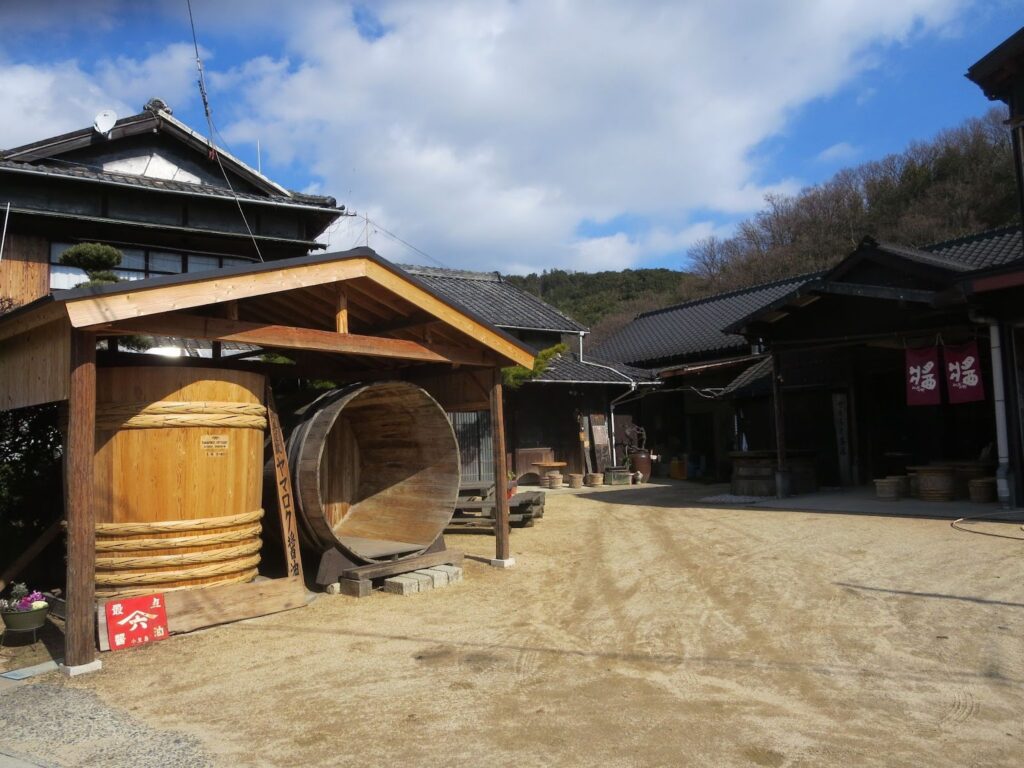
The Yamaroku Shoyu brewery on Shodoshima Island
Shodoshima’s role in Tsuru Bishio isn’t an origin story dressed up as flavor science — it’s a direct, functional relationship. “Shodoshima has an ideal climate for brewing soy sauce,” Yamamoto says. “The air is dry, and the water is soft. It has an impact on the mellow aroma of Tsuru Bishio.” Soft water affects how minerals interact with the mash during fermentation; dry air shapes the microbial environment of the building itself — the conditions under which the organisms living in the kioke do their work. Neither variable is something Yamamoto can engineer around or transplant. The island isn’t the backdrop. It’s a participant.
Steak, Sashimi, and Vanilla Ice Cream
Tsuru Bishio is deeply colored, nearly opaque, and slightly thicker than most soy sauces — the natural result of 30 grams of salt-free solids per 100 milliliters and four years of concentration. The aroma leads with caramel and a quiet sweetness; the finish is long and mellow, the salinity restrained enough that the umami has room to settle rather than spike.
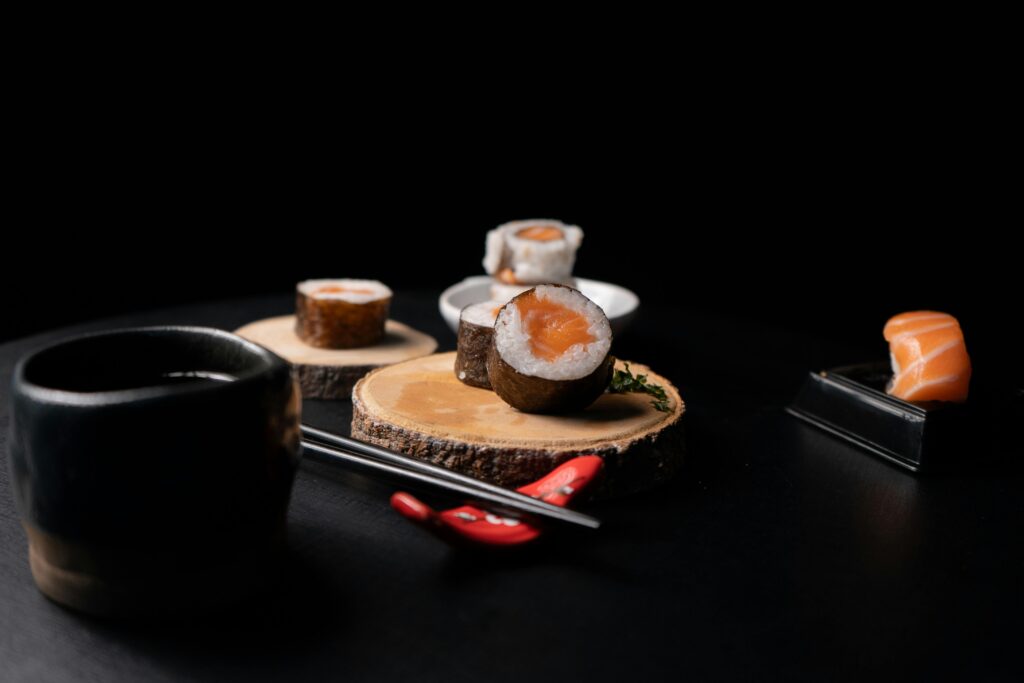
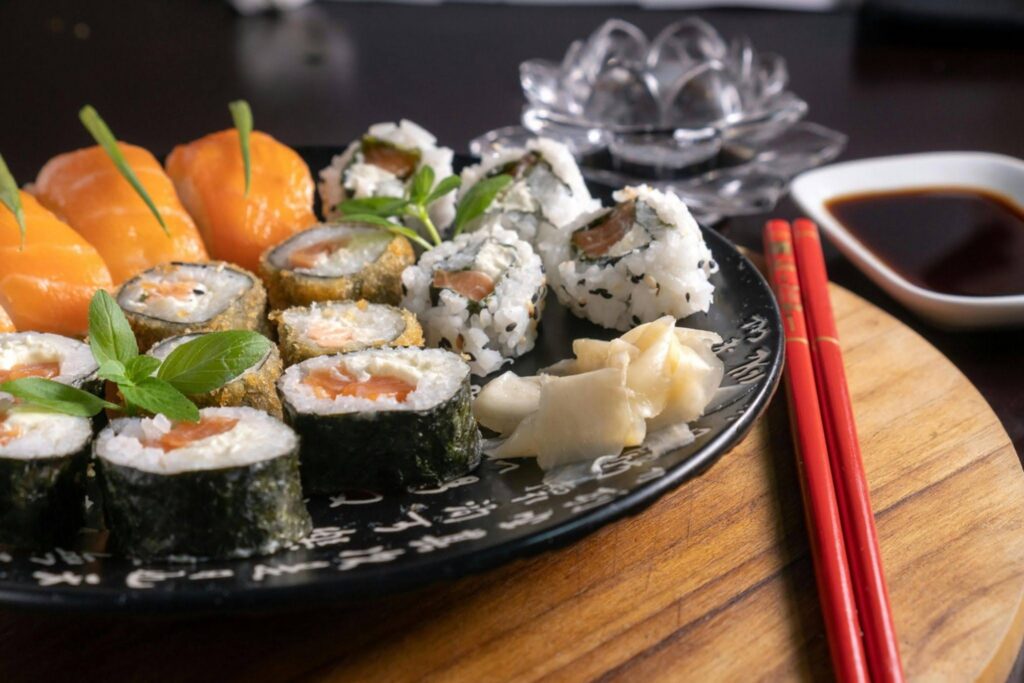
Yamamoto’s recommendation for a first encounter is unambiguous: beef steak, a few drops of Tsuru Bishio, a touch of wasabi. Fat, heat, the brightness of wasabi, the depth of the sauce — it’s a combination that gives the full four years of fermentation somewhere to land. On sashimi, it amplifies without competing. And the vanilla ice cream recommendation, which might raise an eyebrow on first read, reflects something real about the sauce: its caramel depth and concentrated sweetness behave more like a finishing element than a condiment when used sparingly on something cold. It’s the kind of pairing that only makes sense once you’ve stopped thinking of soy sauce as a single thing.
The One Thing That Won’t Change
Tsuru Bishio has evolved across Yamamoto’s tenure at the brewery. How exactly, he won’t say — those changes are his business secrets. What he will say is this: “I will go on and produce soy sauce in wooden barrels.”
That’s the line. The kioke stay.
It’s worth taking that commitment at face value, because the alternative isn’t just a different production method — it’s the end of what Yamaroku actually is. The microorganisms in those barrels aren’t a feature of the brewery. They’re its identity, accumulated across generations in wood that can’t be replaced by stainless steel or replicated from a culture bank. Yamamoto’s most important job, by his own definition, is making sure they’re still there tomorrow.
The brewery is open to visitors without reservation, year-round—his one standing request: don’t eat natto beforehand. The bacteria in fermented soybeans can disrupt the microorganisms in the building — the same ones that have been quietly building Tsuru Bishio since before Yamamoto was born. He’s not being precious about it. He’s just protecting the beings that actually do the work.

18 oz bottle of Tsuru Bishio
Yamaroku Tsuru Bishio is available in the United States through Amazon,Walmart, and specialty Japanese food importer NG, Inc. at shop.nginc.io. Available in 5 oz and 18 oz glass bottles.
[PHOTO CREDITS: All images courtesy of Yamaroku Shoyu, Shodoshima Island, Kagawa Prefecture, Japan.]