By Keiko Kuroshima, the soy sauce sommelier.
The most fundamental difference between kioke (wooden barrels) and large outdoor fermentation tanks comes down to how each vessel relates to the microorganisms that make soy sauce possible.
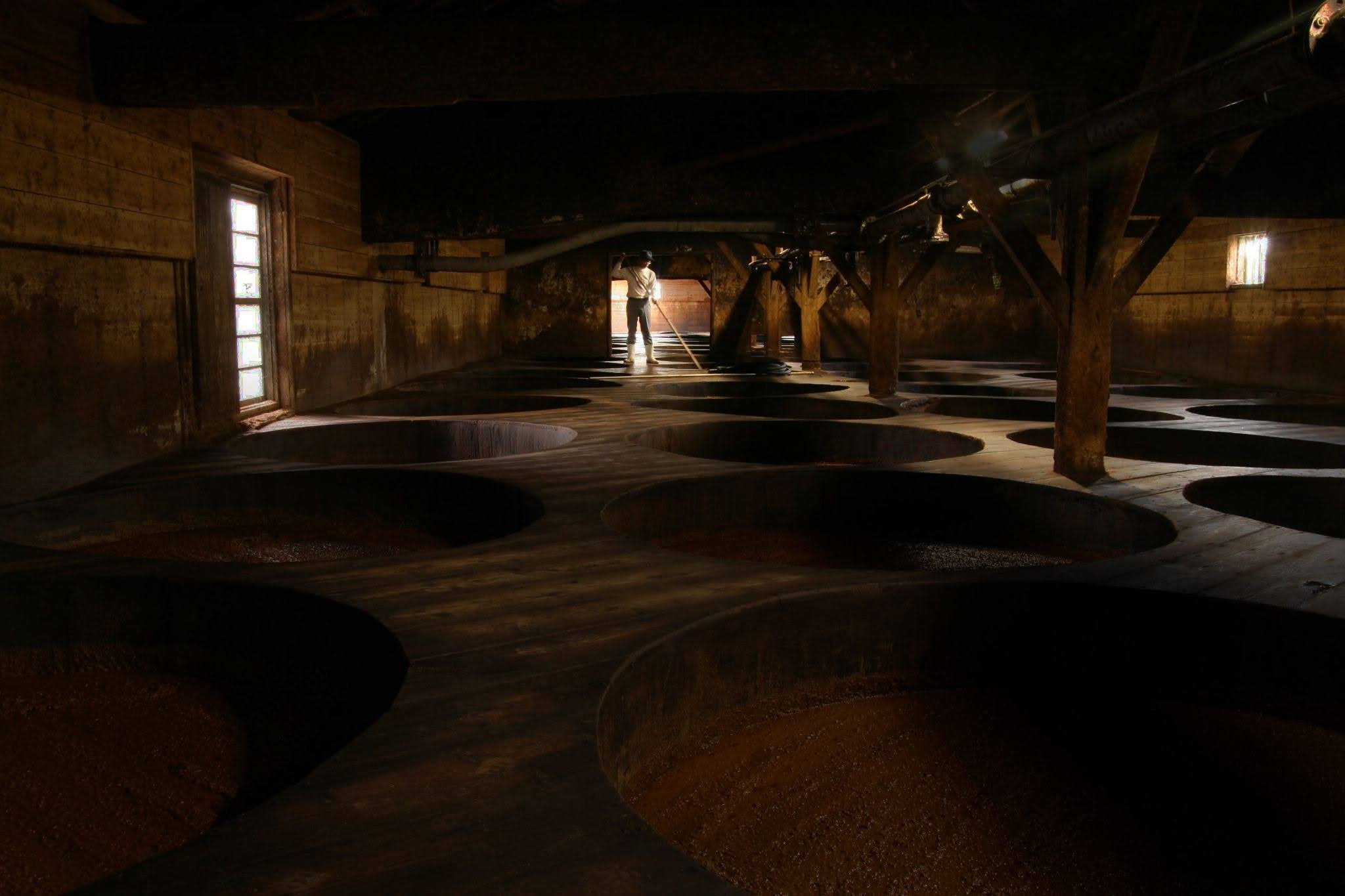
The surface of a wooden barrel is riddled with microscopic pores invisible to the naked eye. Living inside them are yeasts, lactic acid bacteria, and other microorganisms. Shaped over decades and sometimes centuries by the land, climate, and the hands of the brewers who tend them, these microbial communities build a distinct ecosystem unique to each brewery. That ecosystem is what gives each brewery’s soy sauce its particular aroma and flavor.
Kioke brewing doesn’t artificially control fermentation. Instead, it works with the natural temperature shifts of Japan’s four seasons. In winter, koji mold breaks down the raw ingredients. Spring brings lactic acid bacteria to the fore. Summer is when yeast takes over. Each season hands off to the next, and fermentation and maturation advance on their own terms. This traditional approach, known as ten’nen jōzō or natural brewing, is why the process takes more than a year to complete.
The brewer’s role isn’t to control the microorganisms. It’s to create conditions where the countless organisms living in the barrel and the brewery can do their work comfortably. Tending the moromi, watching over it, nurturing it: that accumulated care is what becomes the individual character of each brewery’s soy sauce.
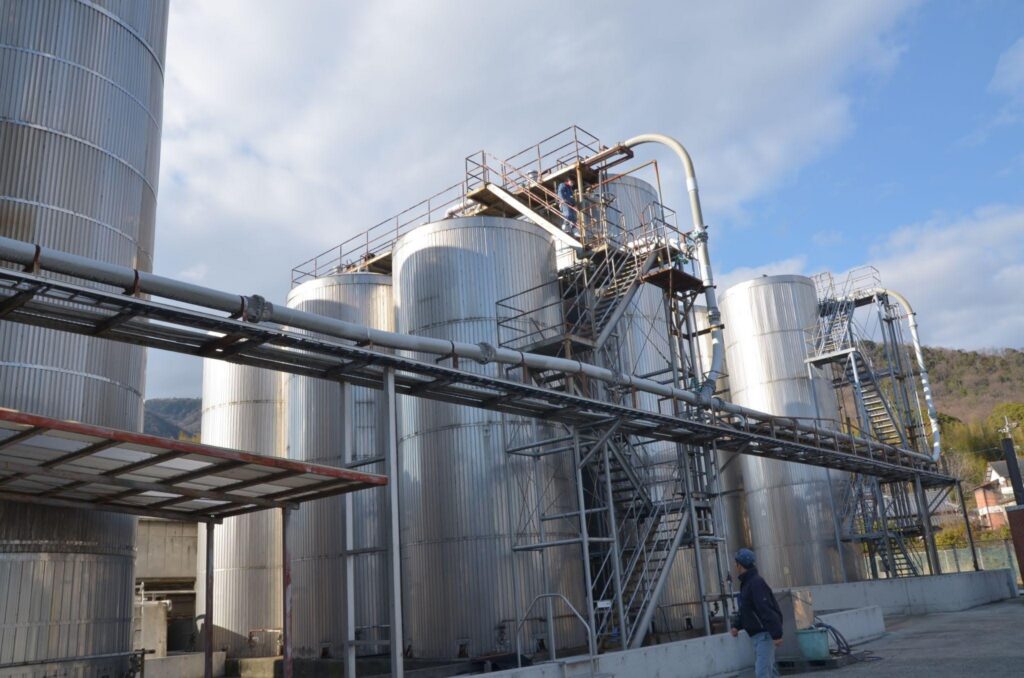
Tank brewing works differently. Before fermentation begins, the tanks are cleaned and sanitized to remove existing microbes. Pure-cultured yeast and lactic acid bacteria are then introduced. Temperature is managed throughout, and soy sauce can be produced in three to six months. Consistent quality is the defining advantage.
Kioke soy sauce is shaped by Japan’s seasons, the microorganisms of the barrel, and the hands of the brewer over time. Tank soy sauce is shaped by scientific management. The paths are different, but both represent refined approaches to brewing, developed with the same goal: to make excellent soy sauce.
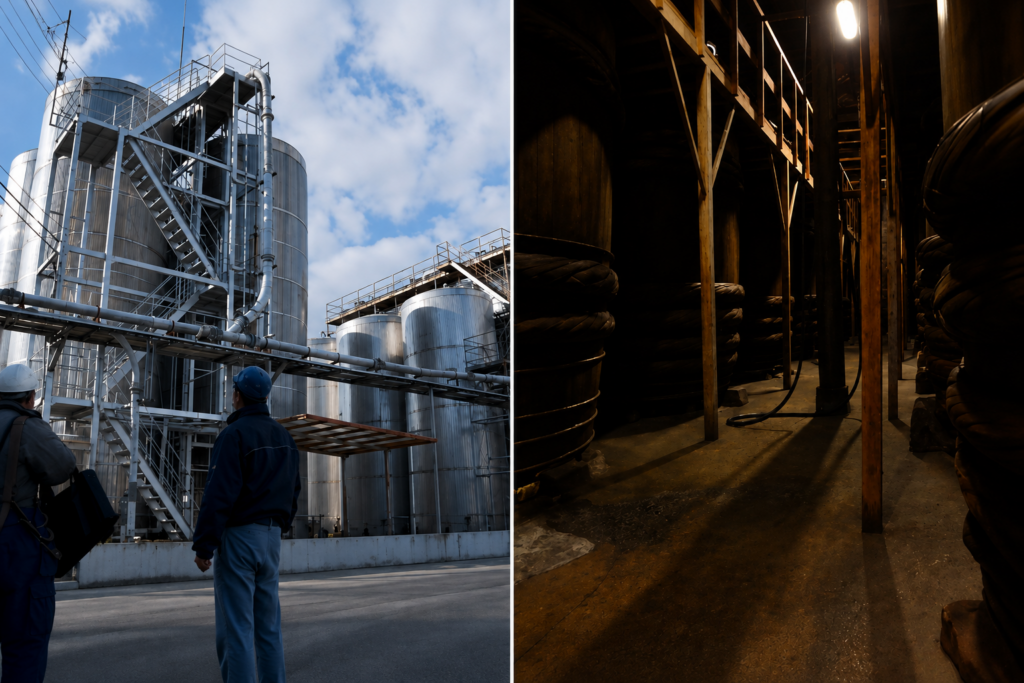
| Large Outdoor Fermentation Tank | Kioke (Wooden Barrel) | |
| Advantages | Pure-cultured microorganisms can be added at the right time, making management straightforward. Temperature control is possible, and large volumes of moromi can be fermented at once, making mass production easier. | Microorganisms take up residence in the wood, allowing each brewery to develop its own distinct aroma and flavor profile. |
| Disadvantages | Difficult to differentiate from other breweries using the same method. | If microbial management fails, spoilage organisms can proliferate and reduce quality. Each barrel can only be used once per year. |
| Material | Interior: FRP or epoxy resin-coated tank. Exterior: stainless steel. | Wood. |
| Fermentation period | 3 to 6 months or more. | 1 year or more. |