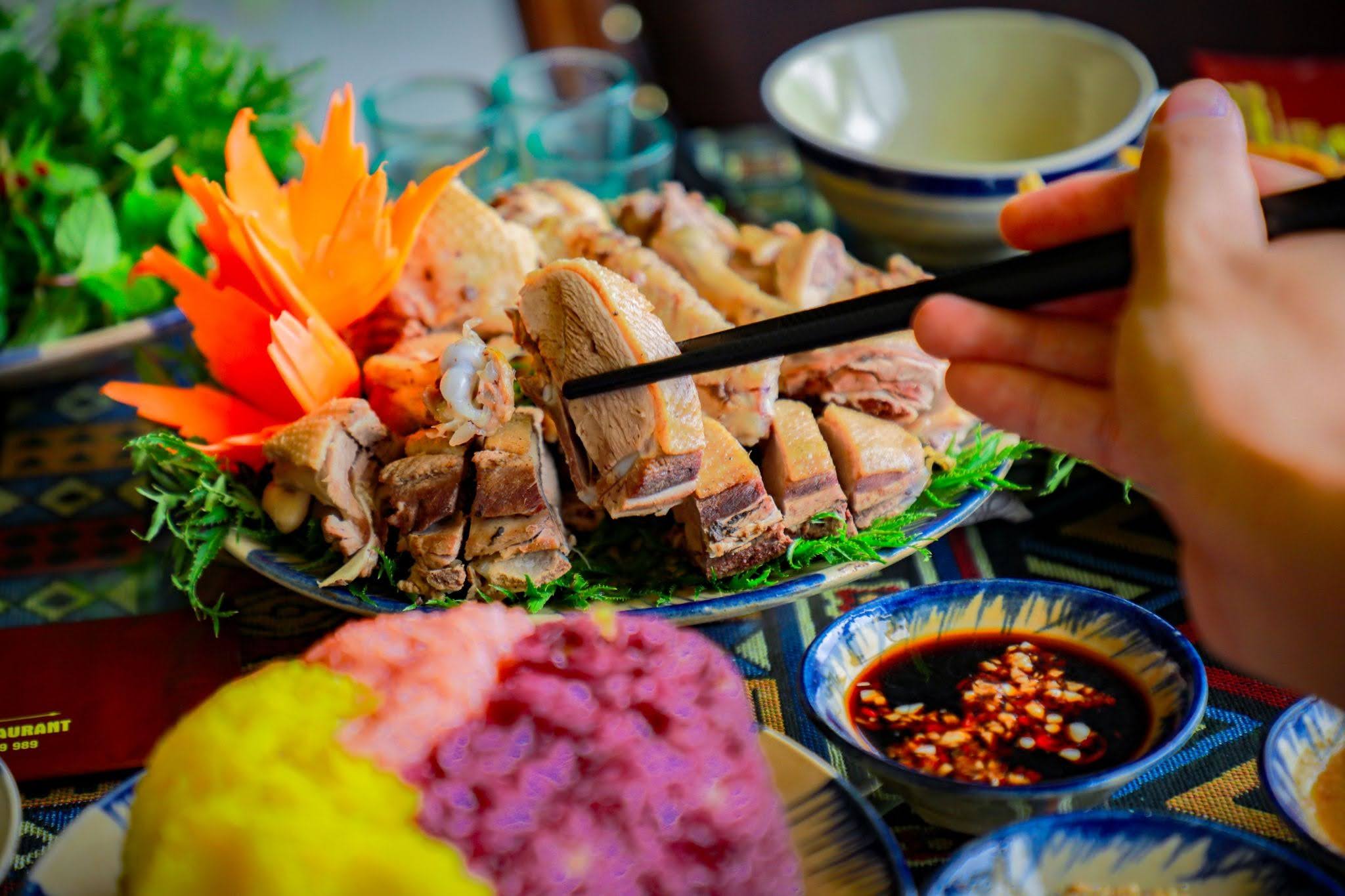
Every Vietnamese cook knows the two brown bottles on the counter aren’t interchangeable. One is fish sauce which built the country’s flavor. The other is Vietnamese soy sauce which fills the rooms fish sauce can’t enter.
Treat them as substitutes and you’ll cook something that looks right but tastes off. Close enough to recognize, off enough to know something’s wrong. The split between the two is the most useful thing a curious cook can understand about Vietnamese seasoning.
Fish Sauce Got There First
Any conversation about Vietnamese soy sauce has to start with what it isn’t: the lead. Fish sauce is.
The USDA Foreign Agricultural Service, drawing on Vietnam’s General Statistics Office, recorded Vietnamese fish sauce production at 386 million liters in 2022. That’s one of the highest national volumes anywhere and a number that shows how thoroughly fish sauce runs the kitchen.
Soy sauce works around that dominance. It steps in for Buddhist vegetarian cooking, for Chinese-Vietnamese dishes, for certain dipping sauces. It doesn’t compete; it specializes.
The trick is knowing what the cook actually reached for. That’s where the language gets interesting.
One Word, Three Sauces
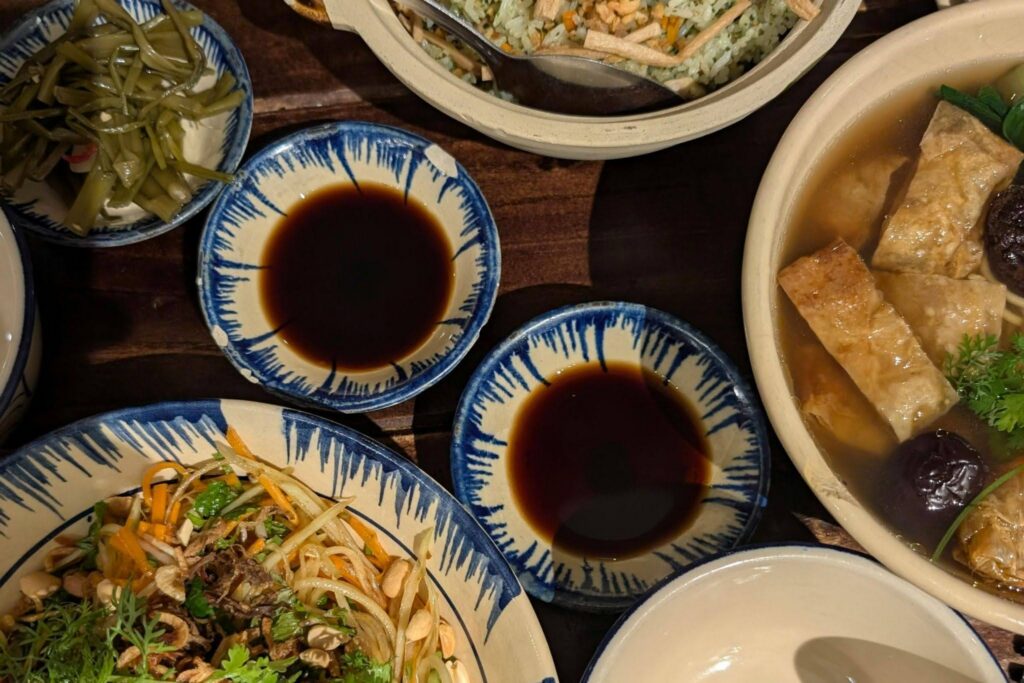
Vietnamese has a linguistic trap waiting for outsiders. The root word tương covers a whole family of products, not just one:
- Tương on its own usually means a thick, salty soybean paste. It’s closer to Japanese miso or Korean doenjang than to the pourable koikuchi shoyu (Japan’s standard dark soy sauce) most Western cooks picture.
- Nước tương is what southerners call liquid soy sauce. Northerners more often call the same product xì dầu, a phonetic borrowing from the Cantonese si yau.
- Tương đen is something else entirely; the dark, hoisin-style sauce squeezed onto a bowl of pho.
The misread tends to land on that first word. A recipe calling for tương isn’t asking for soy sauce. It’s asking for soybean paste. A recipe calling for nước tương is.
Read one as the other, and you end up pouring liquid where the dish wanted scoops.
Where the Real Paste Comes From
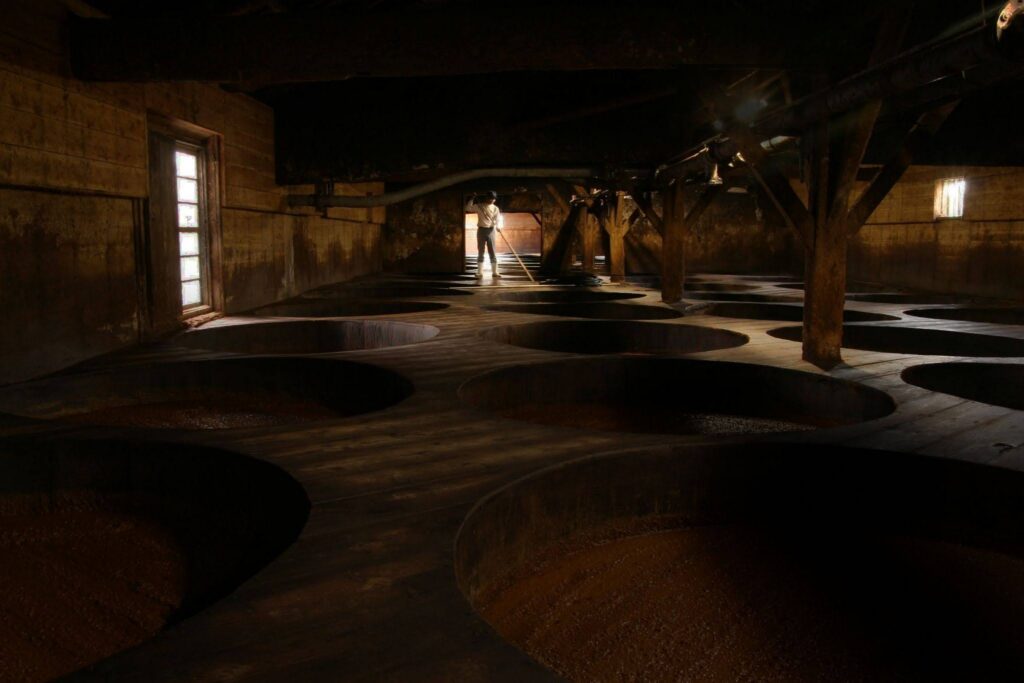
Once the vocabulary settles, Vietnamese tương turns out to have specific addresses. The most famous is tương Bần, made for over a century in Bần Yên Nhân in Hưng Yên Province, southeast of Hanoi. Producers there still sun-ferment soybeans in earthen jars lined up across open courtyards.
Cự Đà outside Hanoi and Nam Đàn in Nghệ An keep their own variants alive on similar terms. Different water, different soybeans, different families, different sauce.
The method shares architecture with Japanese shoyu but plays out differently. Glutinous rice is steamed and laid out to develop Aspergillus oryzaem the same koji mold used by Kikkoman in Noda, Chiba. Roasted ground soybeans, salt, and water join the koji in ceramic jars called chum tương, which sit in the sun for two to three months.
Researchers at Vietnam’s Food Industries Research Institute document in Ethnic Fermented Foods and Beverages of Vietnam that the country’s fermentation tradition has “centuries of history” rooted in preserving agricultural and fishery products. Soy and fish sauces grew up alongside one another, not against.
The flavor is recognizably Vietnamese. Sweeter than Chinese light soy sauce, more rustic than Japanese koikuchi, with a malty edge from roasting the soybeans before they ferment.
The Supermarket Version Is a Different Animal
Most of the soy sauce sold in Vietnamese supermarkets has nothing to do with tương Bần. It’s industrially produced nước tương, often a blend of fermented sauce and acid-hydrolyzed vegetable protein. Sometimes the hydrolysate alone.
That distinction has regulatory teeth. In 2007, Vietnamese authorities tightened limits on 3-MCPD, a carcinogenic byproduct that forms when hydrochloric acid reacts with residual fats during the hydrolysis shortcut.
The U.S. FDA sets a guidance level of 1 mg/kg for 3-MCPD in acid-hydrolyzed protein. The European Union caps it at 0.02 mg/kg. Naturally brewed soy sauce doesn’t generate the compound at all — the chemistry to make it isn’t present.
So “naturally brewed” on a Vietnamese label isn’t marketing flourish. It’s the difference between two completely different ways of getting a brown salty liquid into a bottle.
The Brown Sauce on the Pho Table Isn’t Soy Sauce
Which clears up the most common pho misunderstanding abroad. Pho, Vietnam’s beef-and-rice-noodle soup, gets its savory backbone from fish sauce, not soy sauce. The dark squeeze bottle on the table is tương đen, the hoisin-style sauce. Its red companion is sriracha. Neither is soy sauce.
Where soy sauce does turn up in pho is phở chay, the Buddhist vegetarian version. Cooks swap fish sauce for a soy-based seasoning to keep the broth meat-free.
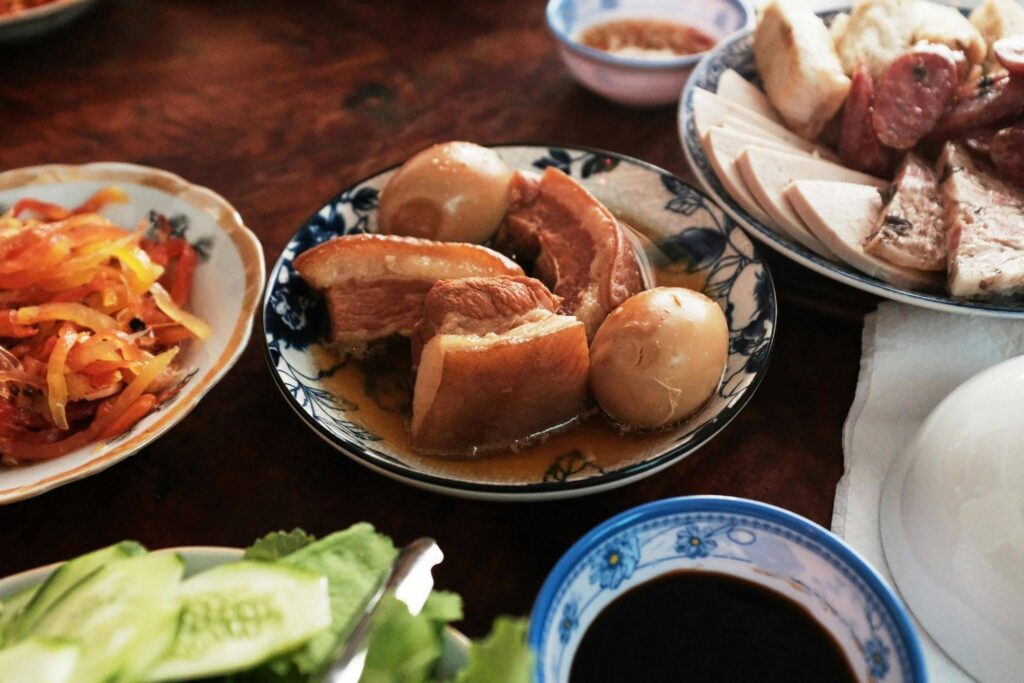
The dishes where soy sauce is genuinely native to Vietnamese cooking are Chinese-influenced: bò lúc lắc (shaking beef), some thịt kho variants, and dipping sauces built on lime, chili, sugar, and a measured pour of nước tương.
The bottle on a Vietnamese table tells you something about the cook holding it. A naturally brewed light soy sauce means seasoning works in a supporting role, knowing its place. A regional tương means the soy itself is doing the lifting.
Either way, what the cook didn’t pick up was the fish sauce. And they had a reason.