By Keiko Kuroshima, the soy sauce sommelier
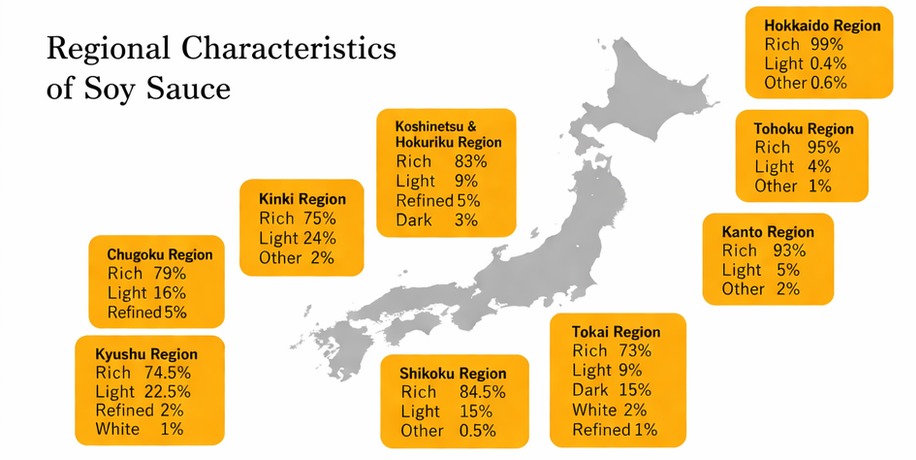
Japanese soy sauce transcends the boundaries of a mere condiment — it exists as a mirror reflecting the climate and history of each region. Its diversity can be unraveled primarily through two axes: “type” and “sweetness.”
Regional Characteristics of “Type” and “Sweetness”
In eastern Japan (Hokkaido, Tohoku, and Kanto), koikuchi soy sauce accounts for more than 90% of the market share, and it’s common for households to keep only one bottle of koikuchi on hand. Within that, the Tohoku region has a culture of skillfully using processed products such as “dashi soy sauce”, which has dashi and sweetness added. Moving westward, the variety becomes more diverse: in the Kinki region, “usukuchi soy sauce”, which preserves the color of ingredients, is used in combination with koikuchi. In the Tokai region, a unique soy sauce culture — including the rich “tamari soy sauce” and the amber-colored “shiro soy sauce” — remains deeply rooted to this day.
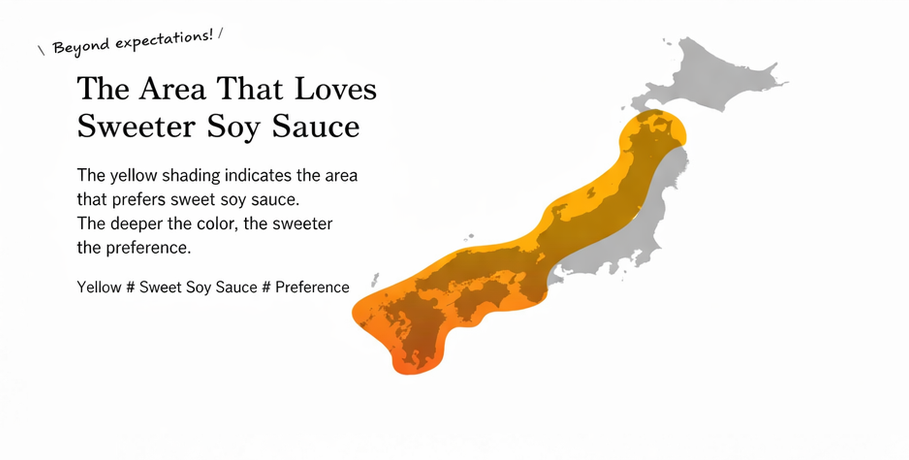
The “sweetness” that determines flavor is also closely tied to region. The cultural sphere of “sweet soy sauce” is surprisingly wide, extending from the Sea of Japan coast of Honshu through Shikoku and into Kyushu. This sweetness tends to intensify the further south you go, becoming strongest in southern Kyushu. Just as people from the Kanto region perceive Kyushu as “sweet” and people from Kyushu perceive Tokyo as “salty,” taste preferences are deeply intertwined with the food culture of each place.
The “Bond Between Breweries and Communities” Nurtured by History
These regional characteristics arose as a remnant of an era when logistics were underdeveloped. Soy sauce is heavy, and transporting it by human power was a significant burden, so sales were naturally limited to local areas. As a result, soy sauce came to undergo its own unique evolution to suit the ingredients and cuisine of each region.
While flavor standardization is advancing in modern times, the reason more than 1,000 breweries still remain across the country is that near each small brewery there are consumers who choose it saying, “it has to be this flavor.” The reason regional flavors don’t disappear is none other than the deep trust and strong bond that breweries and consumers have cultivated together.
About the Author

Keiko Kuroshima, based in Shodoshima, is a certified soy sauce sensory evaluator (shoyu kan’nō kensa-in) accredited by the Japan Soy Sauce Technology Center. She evaluates soy sauce for color, aroma, and taste in accordance with Japanese standards and is active in education, workshops, and publications on soy sauce culture and regional diversity.