A Japanese seasoning, shipped in barrels, brewed on a Georgia plantation, and bottled under a borrowed name…all before the United States had a flag.
Picture the first bottle of soy sauce to reach an American kitchen and you probably imagine a mid-20th-century takeout counter. Move that picture back about two hundred years. Soy sauce was already being poured in colonial port cities before there was a United States to pour it in; shipped from Asia at a steep markup, brewed on a Georgia plantation before the Revolution, and eventually so fashionable that American cooks borrowed its name for sauces that never saw a soybean.
The sauce named the bean, not the other way around
Start with the word, because it gives the game away. “Soy” entered English in the 1670s, not from a plant but from a bottle. Dutch merchants were the ones buying Japanese shōyu and they spelled it by ear as soja or soya. English clipped that to “soy.” Here’s the part that surprises people: the soybean didn’t get its English name until 1795, more than a century later. The plant was named after the sauce, not the other way around.
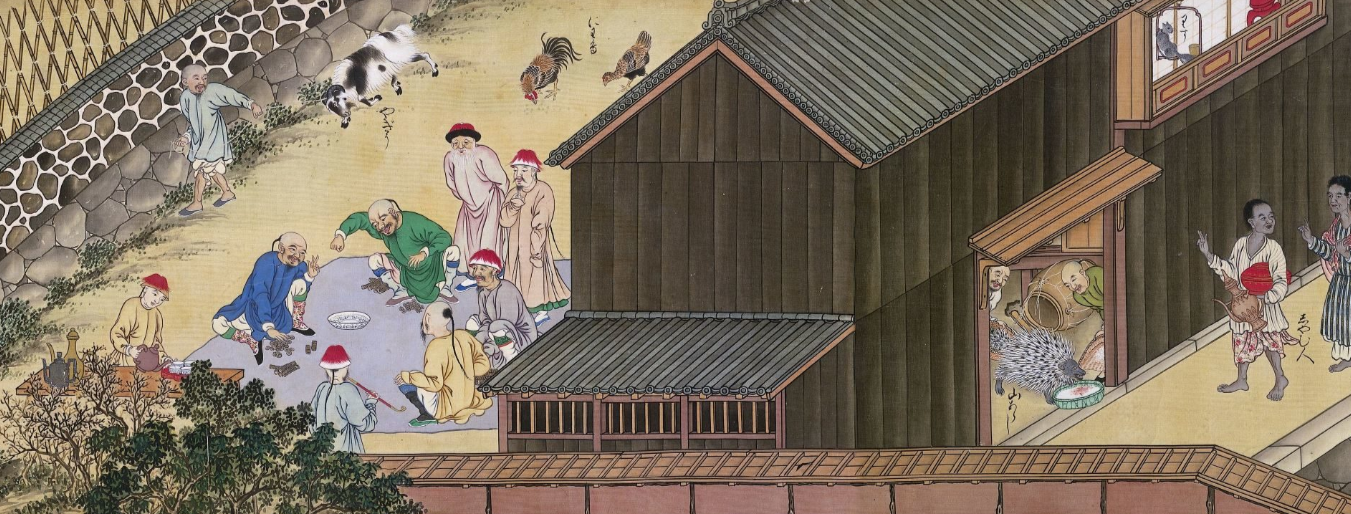
The supply line ran through one tiny door. Japan had a strict isolationist policy called “Sakoku” meaning locked country from 1639 to 1854 till US Commodore Perry arrived with warships to open Japan for trade. From 1647, the Dutch East India Company was exporting shōyu in kegs out of Dejima, the artificial island in Nagasaki harbor that served as Japan’s only trading window to Europe. From there it went to Amsterdam and fanned out across the continent. By 1679 it had reached London, where the philosopher John Locke noted “soy” in his journal, a sign the sauce was already familiar in England.
By the time soy reached colonial American ports, in other words, it had already been a London luxury for decades. And it was a natural traveler: salty, concentrated, and slow to spoil, exactly what you want in a sauce crossing an ocean in a wooden ship.
Read “Soy Sauce Glossary: Koikuchi, Tamari, Ganjang & More“
The Story of the Savannah sailor who brewed it.
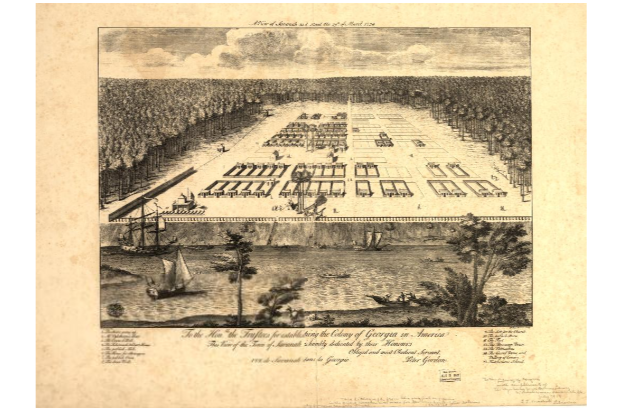
Savannah in 1734, about three decades before Samuel Bowen planted North America’s first soybeans nearby and turned them into “Bowen’s Patent Soy.” Engraving by P. Fourdrinier after Peter Gordon. Library of Congress, Geography and Map Division.
America didn’t just import the stuff, though. For a brief, strange window, it made its own and that chapter belongs almost entirely to one man.
Samuel Bowen was a former East India Company sailor who had spent time in China, carried soybeans back to Savannah, Georgia, around 1765, and had the colony’s surveyor-general plant them, the first soybean crop grown in North America. On his plantation outside town, Bowen used those beans to make soy sauce, the earliest known soy product manufactured on the continent.
He was not shy about it. Bowen started selling “Bowen’s Patent Soy” and shipping it to England by 1766, won a gold medal from the now Royal Society of Arts for introducing and cultivating the Soy Bean in North America and secured a British patent for his sauce. Between 1770 and 1775 he exported more than a thousand quarts of Georgia-made soy to England. Closer to home, by 1776 soy sauce was for sale in port cities up and down the East Coast, much of it his.
Then the irony. When Bowen died in 1777, the bean itself quietly flopped. American farmers would grow soybeans mostly as livestock forage for another century and a half before the crop became the giant it is domestically and internationally for export.
Read “Yugeta Shoyu: Where the Place Is the Main Ingredient“
Franklin mails home a soybean.
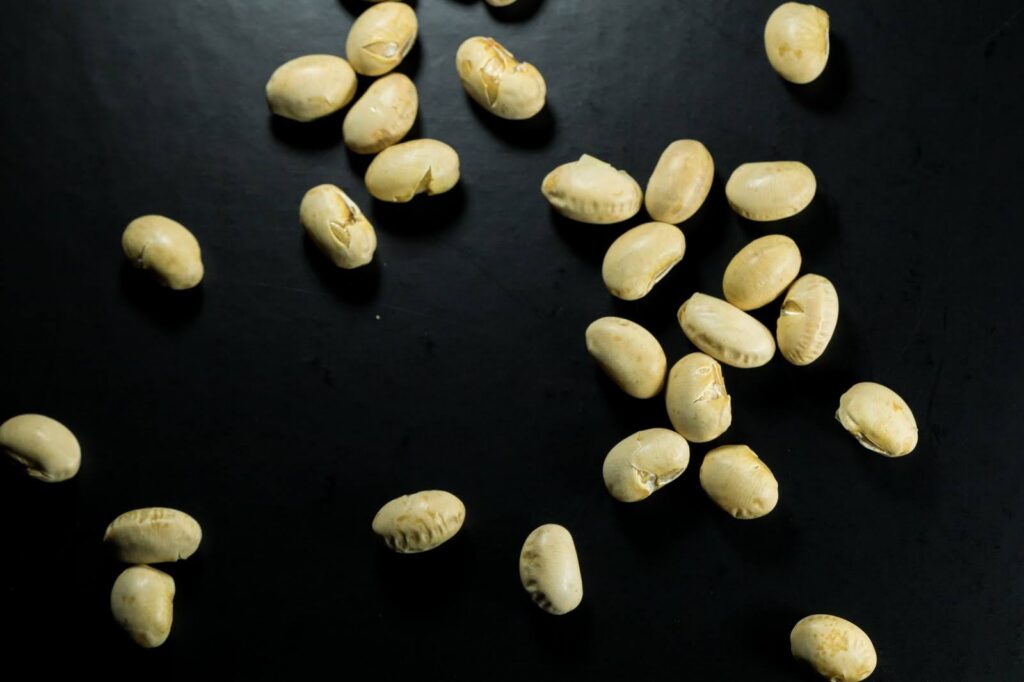
Franklin called them “Chinese Garavances” and mailed a packet to Philadelphia in 1770, curious about the bean curd made from them, not the sauce. Photo: Pakutaso.
The colonies’ most famous tinkerer got curious too, though he was chasing a different soy food.
In January 1770, writing from London, Benjamin Franklin sent his friend, the Philadelphia botanist John Bartram, a packet of “Chinese Garavances”, soybeans, along with a description of a Chinese “cheese” called tau-fu that was made from them. That letter is the first known written reference to tofu in America. Franklin had read a missionary’s account of it and quizzed an English merchant who’d lived in China about how the curds were made.
Note what he was and wasn’t doing: Franklin was fascinated by tofu, not the sauce, and there’s no sign he or Bartram ever actually made any. The charm of it is the timing. While a founding father was mailing beans north and marveling at bean curd, the finished sauce was already bottled, patented, and for sale a few hundred miles to the south.
When “soy” meant anything dark and savory

Mary Randolph’s 1824 The Virginia Housewife printed a recipe for “tomato soy,” which borrowed soy sauce’s name without a single soybean.
Here’s where the story gets tangled, in a way that still trips people up.
For roughly two centuries, the imported Asian sauce traveled under two names at once: “soy” and “ketchup”,the latter also spelled catsup, catchup, and a dozen other ways. Ketchup originally meant a fermented, savory sauce, and it had nothing to do with tomatoes. The two words circled the same imported product for generations.
That’s why the early cookbooks read so oddly now. Hannah Glasse’s The Art of Cookery, a staple of colonial American kitchens, taught cooks to make a homemade “catchup” meant to taste like the expensive “foreign” imported kind. And by the time Mary Randolph published The Virginia Housewife in 1824, one of the most influential American cookbooks of the century, she printed recipes for both “tomato catsup” and “tomato soy.” Neither contained a single soybean. By then, “soy” and “catsup” were barely differentiated in American cooking, and “soy” had drifted into a kind of prestige label for any dark, long-keeping, savory sauce.
One more thing those recipes reveal: the bottle on the early American table wasn’t a dip. These sauces were seasonings cooks stirred into other dishes, a flavor base for meats and vegetables, closer to how you’d use a splash of real soy sauce in a braise than how you’d squeeze ketchup onto fries.
Read “Indonesian Soy Sauce: A Guide to Kecap Manis and Kecap Asin“
How soy sauce got its name back.

Two and a half centuries after Samuel Bowen patented his Georgia-made soy, the bottle is a kitchen-table staple, and nobody mistakes it for ketchup. Photo: Gustavo Fring / Pexels.
The tangle didn’t last. Across the 1800s, “ketchup” narrowed to a single meaning, the tomato version elbowed out the mushroom, walnut, and fish kinds until the word meant the red bottle and nothing else. “Soy” went the other way: the plant kept the name “soybean,” while “soy sauce” settled back onto the specific brewed, fermented product it had described all along. The prestige catch-all shrank back to one precise thing.
Volume finished the job. Through the 20th century, soy sauce stopped being an imported curiosity and became an everyday American staple, carried into home kitchens by Chinese- and Japanese-American cooking. In 1972, Kikkoman opened its first U.S. plant in Walworth, Wisconsin, one of the first major factories a Japanese company built in America, and began brewing soy sauce in the middle of American soybean-and-wheat country.
So the loop closes. The bottle a Savannah sailor once patented, that Franklin’s circle puzzled over, and whose name early cooks borrowed for sauces of their own, is now made in America…from American soybeans, and called, with no confusion left, exactly what it is.
Soy sauce isn’t a newcomer to the American pantry that arrived with takeout menus. It’s one of the oldest imported seasonings on the shelf, quietly flavoring American food since before the country had a name.